Best Sleeping Position for Back Pain: How to Rest Without Discomfort
Finding the best sleeping position for back pain can significantly improve comfort, sleep quality, and daily mobility. Many people focus on daytime posture but overlook how several hours of sleep in a poor position can strain the spine and surrounding muscles.
Back pain may develop due to poor posture, muscle tension, spinal disc issues, or prolonged stress on the lower back. Selecting the right sleeping position supports natural spinal alignment and reduces unnecessary pressure during rest.
This article explains how sleep posture affects back pain, outlines recommended sleeping positions, and provides practical guidance to improve nighttime comfort.
Why Sleep Posture Is Important for Back Pain
The spine has natural curves that help absorb shock and maintain balance. When sleep posture disrupts these curves, it can increase pressure on spinal discs, muscles, and ligaments. Over time, this may lead to stiffness, inflammation, or worsening pain.
The best sleeping position for back pain helps:
- Maintain neutral spinal alignment
- Reduce disc compression
- Relax back and core muscles
- Support proper blood circulation
A supportive sleeping posture allows the body to recover from daily strain and promotes better long-term spinal health.
Best Sleeping Position for Back Pain: What Works Best
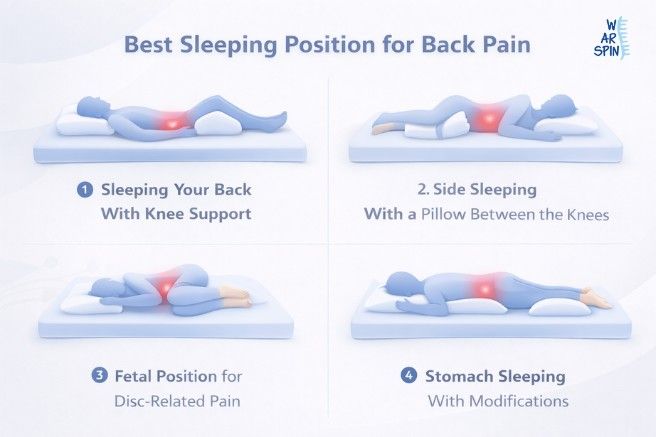
1. Sleeping on Your Back With Knee Support:
Sleeping on your back is often recommended as the best sleeping position for back pain because it allows even weight distribution across the body. This position minimizes stress on the spine when proper support is used.
To improve comfort:
- Place a pillow under your knees to maintain the natural curve of the lower back
- Use a pillow that keeps your neck aligned without pushing your head forward
This position is particularly helpful for people with lower back stiffness or posture-related pain.
2. Side Sleeping With a Pillow Between the Knees
Side sleeping is another commonly recommended option for those experiencing back pain. Adding a pillow between the knees improves pelvic alignment and reduces twisting of the lower spine.
Helpful tips:
- Keep legs slightly bent, not tightly curled
- Use a firm pillow between the knees
- Ensure your head pillow aligns your neck with the spine
For many individuals, this is among the best sleeping positions for back pain, especially when discomfort is linked to nerve irritation or muscle imbalance.
3. Fetal Position for Disc-Related Pain:
The fetal position involves sleeping on your side with your knees drawn slightly toward your chest. This posture may help reduce pressure on spinal discs and ease nerve compression.
This position may be beneficial for:
- Disc bulge or herniation symptoms
- Sciatic nerve discomfort
However, it is important not to curl too tightly, as excessive bending can strain the neck and upper back.
4. Stomach Sleeping With Modifications:
Stomach sleeping is usually not considered the best sleeping position for back pain because it can flatten the spine’s natural curve and strain the neck. However, if this position is unavoidable, small adjustments may help reduce stress.
Suggestions include:
- Using a very thin pillow or none under the head
- Placing a pillow under the pelvis or lower abdomen
These changes can reduce strain on the lower back and improve comfort.
How Sleep Quality Affects Back Pain
Poor sleep can increase pain sensitivity and slow muscle recovery. When sleep is disrupted, the body produces higher levels of stress hormones, which may worsen inflammation and discomfort.
Improving sleep posture supports deeper, more restorative sleep and may reduce the frequency of pain flare-ups.
When Back Pain Needs Medical Attention
If back pain continues despite improving sleep posture, pillow support, and lifestyle habits, medical evaluation may be necessary. Ongoing pain may indicate issues such as disc problems, joint degeneration, or muscle imbalance that require professional care.
Persistent pain that interferes with daily activities or sleep quality should not be ignored.
Common Sleeping Mistakes to Avoid
Some habits can unintentionally worsen back pain during sleep:
- Using multiple pillows that misalign the neck
- Sleeping on an overly soft mattress
- Staying in one position all night without adjustment
- Twisting the spine during side sleeping
Avoiding these mistakes helps maintain spinal balance and comfort.
Frequently Asked Questions (FAQs)
What is the best sleeping position for back pain?
Sleeping on your back with a pillow under the knees or side sleeping with knee support are often considered the best sleeping positions for back pain.
Can poor sleep posture cause long-term back pain?
Yes, prolonged poor posture during sleep can increase strain on spinal structures and contribute to chronic discomfort.
Is side sleeping better than back sleeping for back pain?
Both can be effective. The best option depends on individual comfort, pain location, and proper pillow support.
Should back pain improve immediately after changing sleep position?
Some people notice improvement quickly, while others may need several weeks for the body to adjust and heal.