

Cervical Spondylosis: Symptoms, Causes, Exercises & Treatment
Cervical spondylosis is a degenerative joint disease and if you’re seeking expert diagnosis and care, a trusted spine clinic in Mumbai can guide you from evaluation to recovery.
The condition is largely caused by age-related wear and tear but can also be the result of lifestyle factors, trauma, and genetics.
Let us discuss the condition in detail. Depending on the severity of symptoms, patients may require medical care, physiotherapy for cervical pain, or advanced Cervical Spondylosis treatment.
Understanding the Cervical Spine
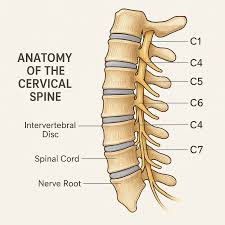
The cervical spine contains seven vertebrae (C1 to C7) which support the head and facilitate movement of the neck. Between vertebrae lie intervertebral discs which are cushion-like and shock-absorbing. They consist of a tough outer cover (annulus fibrosus) and a soft, gelatinous core (nucleus pulposus). Ligaments also support it, and spinal nerves travel in small holes, transmitting impulses to the arms and upper limb. As we get older, these structures start breaking down, and this results in cervical spondylosis.
What Causes Cervical Spondylosis?
a. Aging and Wear & Tear
- Intervertebral discs lose water and elasticity over time, so they are not as good at shock absorption.
- Disc height decreases, which means vertebrae rub against each other more.
- The body attempts to compensate by developing bone spurs (osteophytes), which can compress nerves and result in pain
b. Herniated Discs
Small cracks may develop in the outside covering of discs, letting the inner gel escape. This irritates surrounding nerves, causing pain, numbness, or tingling.
c. Ligament Stiffness
Spinal ligaments can thicken and become less flexible with age, limiting neck motion.
d. Past Neck Injuries
Injury from falls, accidents, or overuse can accelerate disc deterioration.
e. Lifestyle Habits
Slouching, excessive screen time, inadequate exercise, and bad posture may add unnecessary stress to the neck, resulting in premature degeneration.
f. Genetic Factors
An inherited family history of arthritis or spinal disease might enhance your likelihood of experiencing cervical spondylosis.
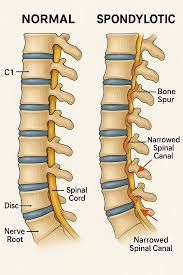
On the left, a healthy cervical spine with thick discs and wide spinal canal. On the right, signs of cervical spondylosis are visible, disc degeneration, bone spurs, and nerve compression.
Identifying the Symptoms
The symptoms differ from individual to individual, some individuals never feel any pain, while others experience continuous discomfort. The following are some common symptoms. Many of these symptoms can be managed with physiotherapist-guided neck exercises for cervical spondylosis, depending on severity::
- Neck stiffness and pain, usually more severe after extended periods of immobility.
- Headaches, typically from the back of the skull.
- Sensation of numbness or tingling in arms and hands (indicative of nerve compression).
- Weakening of arm and shoulder muscles, impairing grip strength.
- Crackling or grating sensation with neck movement owing to joint wear and tear.
Severe Symptoms (Spinal Cord Compression):
- Loss of balance and walking difficulty.
- Bladder or bowel dysfunction (Seek medical attention at once).
Diagnosing Cervical Spondylosis
Physicians employ a variety of means to diagnose the disorder:
Physical Examination
- Assessing neck flexibility, muscle power, and reflexes.
- Examining nerve function using sensation tests.
Imaging Tests
- X-rays: Show bone spurs and alignment problems.
- MRI (Magnetic Resonance Imaging): Gives a detailed picture of discs, nerves, and soft tissues.
- CT Scan: Assists in detecting bone defects.
Nerve Function Tests
- Electromyography (EMG): Assesses muscle electrical activity.
- Nerve conduction studies: Assess how well nerves conduct signals.
How is Cervical Spondylosis treated?
The majority of cases don’t need surgery and can be treated with the following methods:
Medications
- NSAIDs or painkillers reduce pain and inflammation.
- Muscle relaxants relieve spasms and stiffness.
- Corticosteroid injections offer relief from acute pain.
- Medications for nerve pain such as gabapentin may relieve nerve-related pain.
Physical Therapy
- Exercises to strengthen the neck and shoulders.
- Techniques to correct posture.
- Flexibility exercises through stretching routines.
Heat and Cold Therapy
- Cold packs: Reduce swelling and numb pain.
- Heat therapy: Relaxes muscles and enhances blood flow.
Changes in Lifestyle
- Monitor posture—sit straight and do not slouch.
- Take breaks from the screen to minimize neck strain.
- Purchase ergonomic chairs and workstations.
- Exercise regularly and include neck-friendly exercises.
Alternative Therapies
- Chiropractic adjustments can improve mobility.
- Acupuncture has been shown to manage chronic pain.
- Yoga and stretching enhance flexibility and diminish stiffness. Practicing specific yoga for Cervical spondylosis may also help relieve neck pain, improve posture, and support spinal mobility.
When Surgery is Necessary
Surgery is only considered if conservative measures are not effective, or if compression of the nerve results in severe symptoms. The most common operations are:
- Laminectomy: Removing part of the vertebra to decompress.
- Discectomy: Removing a ruptured disc compressing nerves.
- Spinal Fusion: Joining two vertebrae to stabilize the spine.
How to Prevent Cervical Spondylosis?
Growing old is unavoidable, but you can retard spinal degeneration by adopting small but significant lifestyle changes:
- Maintain good posture: Sit and stand with straight back to prevent unnecessary strain.
- Remain active: Exercise regularly strengthens muscles of the neck and back.
- Take breaks from screens: Avoid leaning forward to look at phones or computers for extended periods.
- Employ ergonomic furniture: A good monitor and chair arrangement can make a huge difference.
- Drink plenty of water: Keeps intervertebral discs healthy and in good working condition.
- Quit smoking: Enhances blood flow, keeping spinal structures in good condition.
By doing this, you are able to keep your neck in good health and minimize discomfort to the maximum!
Exploring New and Evolving Treatments for Cervical Spondylosis
Though conventional treatments such as medications, physical therapy and lifestyle modifications continue to help in the treatment of cervical spondylosis but the spine care world is not static. In recent years, newer and more sophisticated treatment methods have begun to gain popularity.
Some of these new treatments are already in practice where as others are still under research for long-term efficiency. It’s always best to consult with your doctor to determine which treatment may be suitable for your particular condition. But to give you an idea of what’s available, here are some of the newer and upcoming treatments for cervical spondylosis:
1. Interventional Procedures
- Radiofrequency Ablation (RFA): This minimally invasive treatment employs heat to “turn off” the nerves that are transmitting pain signals from joints in the neck. It’s not new technology but it has become more accurate and effective over the period of time. For certain individuals, it can provide longer-lasting pain relief than steroid injections.
- Advanced Image-Guided Injections: Physicians are now employing more advanced imaging devices such as ultrasound or fluoroscopy to more precisely guide injections. Some of these injections extend beyond typical steroids and can include substances such as platelet-rich plasma (PRP) or other regenerative agents, though studies are still in progress in this field.
- Targeted Nerve Blocks: These are utilized to both diagnose and treat pain. For instance, a “medial branch block” can be used to determine if the pain is originating from the facet joints. If it is effective, RFA may be the next treatment to offer longer relief.
2. Biologics and Regenerative Medicine
- Platelet-Rich Plasma (PRP) Therapy: PRP involves the collection of small amount of your own blood then processing that blood to spin down the platelets and then inject it in the painful area. The platelets are filled with growth factors that can help heal and decrease inflammation. It has potential, but more studies need to be conducted on how helpful it can be for cervical spondylosis.
- Stem Cell Therapy: This is a hot topic in regenerative medicine. The concept is that stem cells may be able to repair or regenerate injured spinal discs or joints. It’s exciting, but it’s still experimental and not yet widely applied as a standard treatment.
3. Advanced Physical Therapy Techniques
- Refined Manual Therapy: Physical therapists are continually refining hands-on treatments to more effectively mobilize stiff joints and eliminate pain. These techniques are more targeted and effective.
- Neuromuscular Re-education & Proprioceptive Training: These techniques will “retrain” your muscles and enhance body awareness so that your neck can be better supported and strain eliminated.
- Tech-Enhanced Rehab (VR & Biofeedback): New technology such as virtual reality and biofeedback equipment is engaging and targeting therapy more accurately. Virtual reality allows for real-world movement in a safe environment, and biofeedback enables the patient to gain better control over how their muscles react during therapy.
- Sling Exercise Training: This method involves suspension systems that can support or resist your muscles while moving, assisting in increasing stability and muscle activation in the neck.
- Fascia Manipulation: Therapists are now also beginning to pay more attention to the connective tissues (fascia) surrounding and within the neck. Releasing tension in these tissues can improve movement and loosen stiffness.
- Muscle Energy Techniques (MET): This is gentle contracting of particular muscles against resistance to enhance mobility and correct imbalance in the spine.
4. Surgical Innovations
- Motion-Preserving Surgery: While spinal fusion has been a go-to for years, there’s growing interest in surgeries that maintain natural movement in the neck. One such option is artificial disc replacement, where the damaged disc is swapped out with a prosthetic one. This may help preserve mobility and reduce stress on nearby spinal segments. However, this option isn’t suitable for everyone. Your spine specialist will evaluate whether it’s the right fit based on your condition, age, and lifestyle.
- Minimally Invasive Surgical Techniques: Advances in surgical techniques and instrumentation allow for smaller incisions which causes less muscle damage and helps to recover faster.
Important Considerations:
- The effectiveness of these newer treatment options can vary drastically from person to person.
- Lot of research is still needed to fully understand the efficacy and safety of some of these emerging therapy options.
- The best treatment approach will depend on the individual’s specific symptoms, the severity of their condition and their overall health.
Conclusion
Cervical spondylosis is a widespread but complex disorder that affects millions of individuals around the globe that frequently results in chronic neck pain, stiffness, and nerve-related symptoms. Though conventional treatments such as medications, physical therapy and lifestyle modification continue to prove effective but the science of spine health is moving at a faster pace than ever before. Innovative methods like regenerative medicine, minimally invasive procedures and cutting-edge rehabilitation strategies gives new hope for long-term relief.
At We Are Spine, a trusted spine clinic in Mumbai, we are dedicated to delivering the latest treatments and comprehensive care for those who suffer from cervical spondylosis. Our medical experts remain up to date with the cutting edge medical innovations so that our patients have access to the latest and best solutions for their spine related problems. If you’re experiencing any kind of pain in your neck or looking for the most recent treatment options, let us guide you to the optimal route to recovery. Your spine health matters, and we’re here to support you in every step.
What is the best treatment for cervical spondylosis?
The best treatment for cervical spondylosis depends on the severity of symptoms. Common treatments include physical therapy, posture correction, pain-relief medicines, neck exercises, hot/cold therapy, and lifestyle changes. Severe cases may require injections or surgery.
How serious is cervical spondylosis?
Cervical spondylosis is usually not serious in mild cases and is common with aging. However, severe cervical spondylosis can compress nerves or the spinal cord, leading to pain, weakness, numbness, or difficulty walking.
Which vitamin deficiency causes cervical spondylosis?
No single vitamin deficiency directly causes cervical spondylosis, but deficiencies in vitamin D, vitamin B12, and calcium may worsen bone and nerve health, increasing discomfort and stiffness.
What is stage 4 spondylosis?
Stage 4 spondylosis is considered an advanced stage where severe degeneration of spinal discs, bone spurs, and joint damage may cause chronic pain, stiffness, and nerve compression.
At what age does cervical spondylosis start?
Cervical spondylosis commonly starts after age 40, but early signs can appear in younger adults due to poor posture, long screen time, injuries, or sedentary lifestyle habits.
How to avoid cervical spondylosis?
You can reduce the risk of cervical spondylosis by maintaining good posture, exercising regularly, avoiding prolonged mobile or computer use, keeping neck muscles strong, and using ergonomic furniture.
Can spondylosis be cured permanently?
Cervical spondylosis cannot usually be cured permanently because it is an age-related degenerative condition. However, symptoms can be effectively managed with proper treatment and lifestyle changes.
What is the severe stage of cervical spondylosis?
The severe stage of cervical spondylosis occurs when the spinal cord or nerves become compressed, causing intense neck pain, numbness, weakness, balance problems, or difficulty using the arms and hands.
Which vitamin is best for cervical spondylosis?
Vitamin D, vitamin B12, calcium, and magnesium are commonly recommended to support bone, muscle, and nerve health in people with cervical spondylosis.
What type of doctor treats cervical spondylosis?
Cervical spondylosis is commonly treated by orthopedic doctors, neurologists, spine specialists, physiotherapists, and neurosurgeons depending on the severity of the condition.
What is the root cause of cervical spondylosis?
The main cause of cervical spondylosis is age-related wear and tear of the neck spine. Poor posture, repetitive neck movements, injuries, obesity, and sedentary lifestyle may also contribute.
What is the last stage of spondylosis?
The last stage of spondylosis involves severe spinal degeneration, chronic pain, reduced mobility, nerve compression, and possible spinal cord damage that may require surgery.
Is massage good for cervical spondylosis?
Gentle massage therapy may help relieve muscle tension, improve blood circulation, and reduce neck pain in cervical spondylosis. However, deep or aggressive massage should be avoided without medical advice.
What body part is affected by cervical spondylosis?
Cervical spondylosis mainly affects the cervical spine, which is the neck portion of the spine. It can also affect the shoulders, arms, hands, and nerves connected to the neck.
What not to eat in cervical spondylosis?
People with cervical spondylosis should limit processed foods, sugary drinks, excessive salt, fried foods, alcohol, and inflammatory foods that may worsen pain and inflammation.
Does vitamin D deficiency cause spondylitis?
Vitamin D deficiency does not directly cause spondylitis, but low vitamin D levels may weaken bones and muscles, worsening spine-related pain and stiffness.
Can cervical spondylosis affect the brain?
Cervical spondylosis does not directly affect the brain, but severe nerve or blood vessel compression may cause headaches, dizziness, balance problems, or tingling sensations.
Is spondylosis normal with age?
Yes, spondylosis is very common with aging. Many adults over 50 show signs of spinal degeneration even if they do not have symptoms.
Is spondylosis very painful?
Spondylosis can range from mild discomfort to severe pain depending on the degree of degeneration and nerve involvement. Some people experience stiffness while others may have chronic pain.
Should I worry about cervical spondylosis?
Mild cervical spondylosis is usually manageable and not dangerous. You should seek medical attention if you experience severe pain, numbness, weakness, loss of balance, or bladder problems.
Can a neurologist treat spondylosis?
Yes, a neurologist can treat cervical spondylosis, especially when symptoms involve nerve compression, tingling, numbness, or weakness.
Is spondylosis a critical illness?
Cervical spondylosis is generally not considered a critical illness. However, untreated severe cases can lead to nerve damage, mobility problems, and reduced quality of life.
Cervical ke lakshan kya hote hain?
Cervical ke lakshan में गर्दन दर्द, गर्दन में अकड़न, कंधों और हाथों में दर्द, झनझनाहट, सुन्नपन, सिर दर्द और चक्कर आना शामिल हो सकते हैं। कई लोगों को हाथों में कमजोरी भी महसूस होती है।


8 Responses