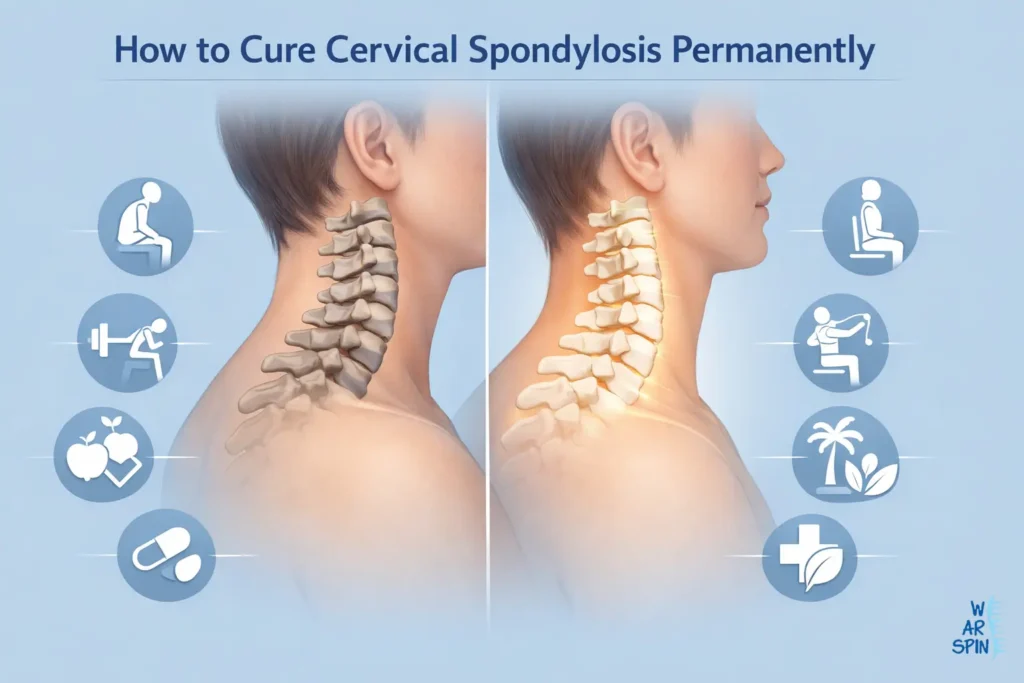
Cervical spondylosis is one of the most common causes of neck pain, stiffness, and nerve-related symptoms in adults. However, with increasing screen time, desk jobs, poor posture, and reduced physical activity, cervical spondylosis in young age is becoming increasingly common. Many people in their 30s and even late 20s are now being diagnosed with early degenerative changes in the cervical spine. In fact, the early signs of cervical spondylosis are often overlooked or mistaken for routine neck strain, leading many patients to ask an important question: How to cure cervical spondylosis permanently?
To answer this honestly, it is important to understand what cervical spondylosis is, why it occurs, and what “permanent cure” actually means in medical terms.
What Is Cervical Spondylosis?
Cervical spondylosis refers to age-related degenerative changes in the cervical spine, which includes the seven vertebrae in the neck. Over time, the intervertebral discs lose hydration and elasticity, joints undergo wear and tear, and bone spurs (osteophytes) may form.
These changes can:
- Reduce disc height
- Narrow nerve spaces
- Compress spinal nerves or the spinal cord
- Cause stiffness and pain
Cervical spondylosis develops slowly and is considered a chronic degenerative condition, not an infection or injury.
Can Cervical Spondylosis Be Cured Permanently?
Cervical spondylosis cannot be permanently cured in the sense of reversing spinal degeneration. Once discs and joints undergo degenerative changes, they cannot return to their original state.
However, cervical spondylosis can be effectively managed, symptoms can be controlled long-term, and progression can be slowed significantly. Many patients live pain-free, active lives by following the right treatment and lifestyle strategies.
In medical practice, the goal is:
- Long-term pain relief
- Preservation of neck movement
- Prevention of nerve damage
- Avoidance of surgery whenever possible
Common Symptoms of Cervical Spondylosis
Symptoms vary depending on severity and nerve involvement. Common symptoms include:
- Chronic neck pain or stiffness
- Pain radiating to shoulders or arms
- Tingling or numbness in hands or fingers
- Headaches starting at the base of the skull
- Reduced neck mobility
- Muscle weakness in advanced cases
Symptoms may worsen after long periods of sitting, mobile phone use, or poor sleeping posture, as shown in research on the effect of prolonged smartphone use on posture.
Best Long-Term Treatments for Cervical Spondylosis
1. Posture Correction (Most Critical Factor)
Poor posture is one of the biggest contributors to symptom progression. Forward head posture, slouching, and prolonged screen use increase stress on cervical discs.
Corrective measures include:
- Keeping screens at eye level
- Avoiding bending the neck while using phones
- Sitting with proper back and neck support
- Maintaining neutral neck alignment
Consistent posture correction can significantly reduce pain and prevent flare-ups.
2. Physiotherapy and Neck Exercises
Physiotherapy is the cornerstone of long-term management. A trained physiotherapist designs exercises to:
- Strengthen neck and upper back muscles
- Improve flexibility and range of motion
- Reduce nerve compression
- Improve posture control
Daily exercises, when done correctly, can reduce stiffness and pain over time and help prevent recurrence.
3. Lifestyle Modifications
Small lifestyle changes play a big role in long-term relief:
- Take frequent breaks during desk work
- Avoid sudden neck movements
- Use a supportive pillow that maintains natural neck curvature
- Maintain a healthy weight
- Stay physically active
Reducing prolonged static postures helps lower pressure on cervical discs.
4. Medications for Symptom Control
Medications help manage pain during acute flare-ups but do not cure the condition. These may include:
- Anti-inflammatory medications
- Muscle relaxants
- Neuropathic pain medications
Medications should always be used under medical supervision and are not meant for long-term dependency.
5. Cervical Collar (Short-Term Use Only)
A soft cervical collar may be recommended during severe pain episodes to limit neck movement temporarily. However:
- Long-term use is discouraged
- Overuse can weaken neck muscles
It should only be used for short durations when advised by a doctor.
6. Injection Therapy (Selective Cases)
In cases of persistent nerve-related pain, cervical epidural steroid injections may help reduce inflammation and pain. These provide temporary relief and are used selectively when conservative treatment is insufficient.
When Is Surgery Needed for Cervical Spondylosis?
Surgery is not required for most patients and is considered only when symptoms do not improve with conservative care. In such cases, a specialist may evaluate different cervical spondylosis treatment options to determine whether surgical intervention is necessary. Surgery is typically recommended only when:
- Symptoms do not improve with conservative treatment
- Progressive nerve weakness develops
- There is spinal cord compression
- Balance or coordination is affected
Surgical procedures aim to relieve nerve or spinal cord pressure, not cure degeneration.
Can Cervical Spondylosis Improve Naturally?
Yes, many people experience significant improvement with:
- Regular physiotherapy
- Correct posture
- Consistent exercise
- Lifestyle changes
Symptoms often come in cycles, and with proper care, patients can remain symptom-free for long periods.
How to Prevent Cervical Spondylosis From Worsening
Although aging cannot be stopped, progression can be slowed by:
- Maintaining neck muscle strength
- Staying physically active
- Avoiding smoking
- Managing stress
- Sleeping in a neutral neck position
Prevention plays a crucial role in long-term comfort.
Frequently Asked Questions (FAQs)
Is cervical spondylosis permanent?
Cervical spondylosis is a degenerative condition, meaning the structural changes in the spine are permanent. However, symptoms are not always permanent. With proper posture, physiotherapy, lifestyle changes, and medical care, many people experience long periods without pain or stiffness.
Can cervical spondylosis affect the brain?
Cervical spondylosis does not directly affect the brain, but severe cases may compress the spinal cord or nearby nerves, leading to symptoms such as dizziness, headaches, balance problems, or coordination issues. These symptoms occur due to nerve involvement, not because the brain itself is damaged.
What is the best sleeping position for cervical pain?
The best sleeping position for cervical pain is on the back or side, using a pillow that supports the natural curve of the neck. Avoid sleeping on the stomach, as it forces the neck into an unnatural position. Proper pillow height and neutral neck alignment can significantly reduce morning stiffness and pain.
How to treat cervical pain in pregnancy?
Cervical pain during pregnancy should be managed conservatively. Safe measures include maintaining good posture, using supportive pillows, gentle stretching, heat therapy, and pregnancy-approved physiotherapy. Medications should only be taken after consulting a healthcare professional, as many pain relievers are not safe during pregnancy.
Key Takeaway
How to Cure Cervical Spondylosis Permanently is a common question, but the truth is that cervical spondylosis cannot be cured permanently. However, it does not have to control your life. With early diagnosis, physiotherapy, posture correction, and healthy lifestyle changes, most people achieve long-term relief and maintain normal daily activities without the need for surgery.
Long-term relief is possible when the condition is managed through the right cervical spondylosis treatment approach based on individual spine health.