A slipped disc, also known as a herniated disc, is a common spinal condition that occurs when the soft inner gel of a spinal disc protrudes through the tougher outer layer. This can irritate nearby nerves and cause pain, numbness, or weakness in different parts of the body.
Understanding the slipped disc symptoms is crucial for early diagnosis and timely treatment. Many people dismiss early signs as simple back strain or fatigue, which can delay care and lead to complications. This blog will help you identify the early warning signs, understand the risks, and know when to seek medical attention.
What Is a Slipped Disc?
The spine consists of vertebrae separated by intervertebral discs, which act as shock absorbers and provide flexibility. When a disc bulges or ruptures, it is referred to as a slipped disc. This can compress nearby spinal nerves, causing pain, numbness, tingling, or weakness.
Slipped discs can occur anywhere along the spine: cervical (neck), thoracic (mid-back), or lumbar (lower back). The lumbar region is the most commonly affected area due to its load-bearing role.
In severe cases, symptoms may resemble spinal stenosis or sciatica.
Causes and Risk Factors
A slipped disc can result from degeneration, injury, or lifestyle factors. Key causes and risk factors include:
- Age-related wear and tear: Discs lose flexibility and water content as we age, making them more prone to herniation.
- Poor posture: Slouching while sitting or standing increases stress on the spine.
- Repetitive lifting or twisting: Improper lifting techniques can strain discs.
- Obesity: Excess weight places additional pressure on spinal discs, particularly in the lower back.
- Sedentary lifestyle: Weak core and back muscles provide less support to the spine.
- Genetic predisposition: Some people inherit weaker discs or connective tissues, increasing vulnerability.
For risk management, consult our spine specialists for evaluation.
Common Slipped Disc Symptoms
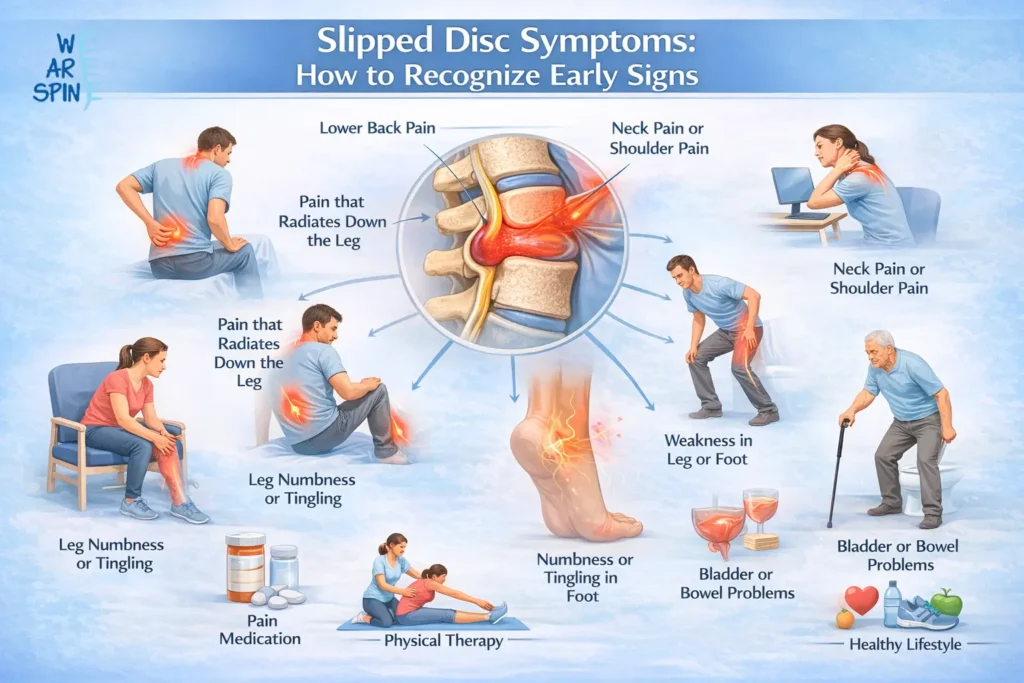
Symptoms may vary depending on the disc’s location and severity. Common slipped disc symptoms include:
- Localized pain: Aching or sharp pain at the site of the affected disc.
- Radiating pain: Pain that spreads to arms, hands, buttocks, or legs due to nerve compression.
- Numbness or tingling: A “pins and needles” sensation along the affected nerve.
- Muscle weakness: Difficulty lifting objects or performing routine activities.
- Limited mobility: Trouble bending, twisting, or standing for long periods.
- Pain aggravated by sitting or bending: Discomfort increases with certain positions.
Symptoms by Location
1. Lumbar (Lower Back) Slipped Disc:
The lower back is most prone to slipped discs. Symptoms include:
- Pain radiating down one or both legs (sciatica)
- Tingling or numbness in the legs or feet
- Muscle weakness in the legs, making walking or climbing stairs difficult
- Lower back stiffness and reduced flexibility
Symptoms may resemble spinal stenosis or spondylolisthesis.
2. Thoracic (Mid Back) Slipped Disc
Less common but still significant, mid-back herniations can lead to:
- Upper or mid-back pain
- Pain radiating around the chest or rib cage
- Tingling or numbness in the torso
- Muscle weakness affecting posture or stability
Misdiagnosis may occur with kyphosis or spinal deformities.
3. Thoracic (Mid Back) Slipped Disc
Less common but still significant, mid-back herniations can lead to:
- Upper or mid-back pain
- Pain radiating around the chest or rib cage
- Tingling or numbness in the torso
- Muscle weakness affecting posture or stability
Misdiagnosis may occur with kyphosis or spinal deformities.
Complications if Untreated
Ignoring slipped disc symptoms can lead to:
- Chronic back pain
- Muscle weakness or atrophy
- Nerve damage leading to permanent numbness
- Reduced mobility and daily activity limitations
- Potential impact on bladder or bowel control
Severe cases should be evaluated immediately by spine surgeons in Mumbai.
Warning Signs That Require Immediate Medical Attention
Seek urgent care if you notice:
- Loss of bladder or bowel control
- Severe leg or arm weakness
- Progressive numbness in limbs or groin area
- Inability to walk or maintain balance
- Severe pain not relieved by rest
If symptoms persist, book a consultation for evaluation.
Conclusion
Recognizing slipped disc symptoms early is vital for effective treatment and avoiding complications. Persistent pain, tingling, numbness, or weakness should not be ignored. Early evaluation, diagnosis, and treatment by trained specialists can help maintain mobility, reduce pain, and improve quality of life.
For more information, visit We Are Spine for a personalized consultation.
Frequently Asked Questions (FAQs)
How to heal a slipped disc?
Most slipped discs heal with rest, physical therapy, and pain management. Short-term rest, anti-inflammatory medication, and exercises to strengthen the back and core help recovery. Surgery is rarely needed.
How do I know if I've slipped a disc?
Signs include persistent back pain, pain radiating to the arms or legs, numbness or tingling, and muscle weakness. A doctor may confirm with MRI, X-ray, or nerve tests.
How long does a slipped disc last?
Mild cases often improve in 4–6 weeks. Moderate or severe herniations can take 3–6 months, depending on treatment and lifestyle adjustments.
What are the main causes of a slipped disc?
Common causes include age-related degeneration, poor posture, repetitive lifting, injury, sedentary lifestyle, and obesity. Genetics may also increase risk.
How can I test for a slipped disc at home?
Watch for persistent back pain, radiating pain to legs or arms, numbness, tingling, or weakness. Avoid heavy exercise if symptoms appear and see a doctor for proper diagnosis.