Spinal Cord Injury Explained: Causes, Symptoms, and the Road to Recovery
The spinal cord is a remarkable structure—an intricate bundle of nerves encased within the protective vertebrae of the spine. It serves as the critical link between the brain and the body, transmitting electrical signals that control movement, sensation, and vital bodily functions. When the spinal cord is injured, whether through trauma or disease, the consequences can be devastating and far-reaching.
Spinal cord injuries are among the most life-altering medical conditions a person can experience. In a matter of seconds, an accident, fall, or unexpected health issue can disrupt the very system that controls movement, sensation, and essential body functions. The aftermath can be physically, emotionally, and psychologically overwhelming—not just for the individual affected, but also for their families and support systems.
Every year, thousands of people around the world face the challenges brought on by spinal cord injuries, navigating a new reality that demands resilience, adaptation, and often lifelong care. While the impact is profound, advancements in medicine, rehabilitation, and technology are offering renewed hope and opportunities for recovery and improved quality of life.
Understanding the causes, recognizing the early signs, and exploring treatment and recovery options are critical steps toward building awareness and supporting those living with spinal cord injuries. In the following sections, we will delve deeper into what a spinal cord injury is and how it affects the human body.
What is Spinal Cord Injury (SCI)?
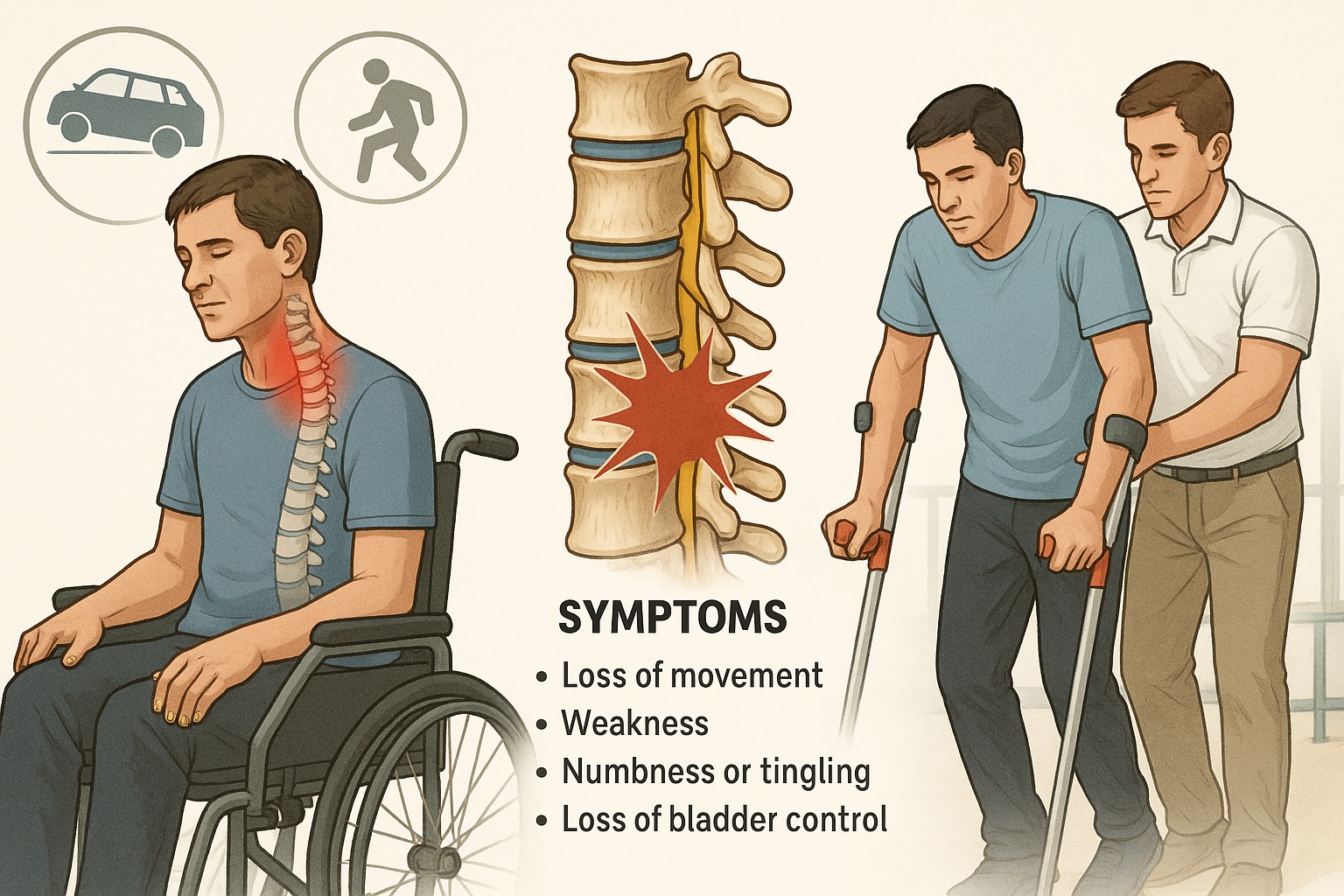
A spinal cord injury (SCI) is a serious medical condition involving damage to the spinal cord—the long, cylindrical structure of nerve tissue housed within the spinal column (backbone) that connects the brain to the rest of the body. It plays a crucial role in transmitting signals that control voluntary movements (like walking or writing), sensations (such as touch and temperature), and involuntary functions (like breathing, heart rate, and digestion).
SCI can result from traumatic causes (e.g., car crashes, falls, sports injuries, or acts of violence) or non-traumatic causes (e.g., tumors pressing on the cord, infections, autoimmune diseases like multiple sclerosis, or degenerative conditions).
The spinal cord itself doesn’t need to be completely severed for an injury to have serious effects. Even a bruise, compression, or inflammation of the cord can significantly impair its function.
Unlike some other parts of the body, the spinal cord has limited ability to heal or regenerate once damaged. This makes spinal cord injuries particularly devastating. However, with rapid medical response, rehabilitation, assistive technologies (like wheelchairs or robotic devices), and emotional support, many individuals can regain independence and lead fulfilling lives.
When the spinal cord is injured, the communication between the brain and the body is either disrupted or completely lost, depending on the severity of the injury. This can result in partial or total loss of movement (motor function) and/or sensation (sensory function) below the site of injury. The impact can be temporary or permanent, mild or severe, and in some cases, life-threatening.
Types of SCI Based on Severity:
1. Complete SCI:
- In a complete injury, there is a total loss of all sensory and motor functions below the level of injury.
- No voluntary movement or feeling exists in the affected parts of the body.
- This type of injury often results in paraplegia (if the lower part of the spinal cord is affected) or tetraplegia/quadriplegia (if the neck region is affected).
2. Incomplete SCI:
- Here, some signals can still pass through the injured area of the spinal cord.
- Individuals may retain partial sensation and movement depending on which part of the cord is damaged and how severely.
- Outcomes vary widely—from being able to walk with difficulty to retaining movement in just one limb.
Types of Paralysis Caused by SCI:
- Paraplegia: Loss of function in the legs and lower body, often resulting from injuries to the thoracic, lumbar, or sacral regions.
- Tetraplegia (Quadriplegia): Loss of function in all four limbs and the torso, typically due to damage in the cervical (neck) region.
Causes of Spinal Cord Injury
Spinal cord injuries are primarily classified into traumatic and non-traumatic causes:
a) Traumatic Causes:
These involve a sudden, physical blow or impact to the spine that damages the spinal cord. Common causes include:
- Motor vehicle accidents – The leading cause of SCI worldwide.
- Falls – Especially common in older adults.
- Sports injuries – High-impact sports like football, rugby, diving, or gymnastics.
- Violence – Gunshot wounds, stab injuries, or physical assaults.
- Industrial or construction accidents – Heavy machinery or structural collapses.
b) Non-Traumatic Causes:
These involve medical conditions or diseases that gradually damage the spinal cord:
- Tumors – Cancerous or benign growths pressing on the spinal cord.
- Degenerative spinal conditions – Like spinal stenosis or herniated discs.
- Infections – Tuberculosis (Pott’s disease), abscesses, or meningitis.
- Autoimmune diseases – Such as multiple sclerosis or transverse myelitis.
- Congenital disorders – Like spina bifida.


6 Responses