
How Your Nervous System Gets Affected By Spinal Health: The Vital Link Explained
spine effecting the nervous system
Introduction: Beyond Bones—Your Spine as the Lifeline of Communication
When we hear the word “spine,” many of us think of posture, back pain, or the skeletal structure that keeps us standing tall. But the spine is much more than just a stack of bones; it’s the superhighway for one of the most intricate and essential systems in your body—the nervous system. Every blink, breath, heartbeat, and reflex you experience is part of a complex web of communication orchestrated by your brain and delivered via your spinal cord. It’s easy to overlook this connection until something goes wrong—like a pinched nerve or slipped disc—and suddenly, even the simplest tasks become challenging.
At the heart of this neural orchestra lies the spinal cord, shielded and supported by the spine. It functions as the main transmission line, linking your brain to nearly every part of your body. Whether it’s the joy of feeling a hug, the instinct to pull your hand away from a hot pan, or the coordination required to walk, it all traces back to this central communication channel. The integrity of this system depends heavily on the health of your spine.
What many people don’t realize is that spinal health can influence far more than just physical movement. From digestive issues and fatigue to chronic headaches and reduced immunity, spinal problems can ripple through the body in surprising ways. This is because the spine not only protects the spinal cord but also serves as the command center for both voluntary and involuntary functions governed by the nervous system. Understanding this relationship isn’t just useful for doctors or chiropractors—it’s a key insight for anyone who wants to lead a healthy, active life.
In this blog, we’ll explore the intimate relationship between your spine and your nervous system, understand what happens when things go wrong, and share practical lifestyle tips to help you maintain optimal spinal health. Because when your spine is aligned, your whole body is in sync.
The Anatomy of the Connection: How the Spine Supports the Nervous System
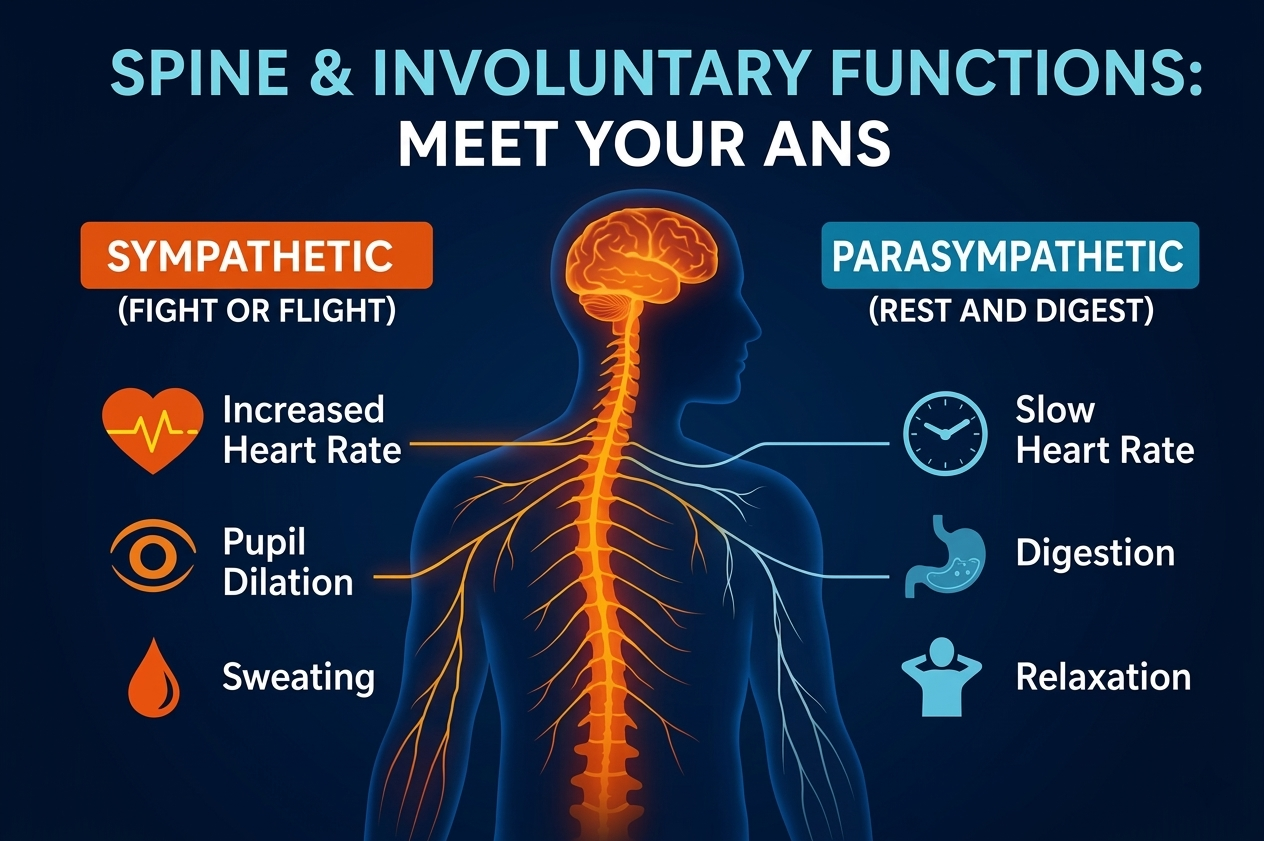
Your spine also plays a crucial role in regulating involuntary bodily functions through the Autonomic Nervous System (ANS), which controls heart rate, digestion, respiration, and more. This system has two branches:
- Sympathetic Nervous System (“Fight or Flight”): Originates in the thoracic and lumbar spine; helps your body respond to stress.
- Parasympathetic Nervous System (“Rest and Digest”): Arises from the brainstem and sacral spine; keeps your body calm and stable.
Issues in these spinal regions can cause everything from gastrointestinal problems to poor sleep and increased anxiety.
Protecting Your Spine = Protecting Your Nervous System
Spinal health doesn’t just happen by chance—it’s something you have to actively work toward. Here are some practical tips:
- Stay Active: Regular exercise helps maintain spine-supporting muscles and improves blood flow to the spinal cord.
- Mind Your Posture: Keep your head aligned, shoulders relaxed, and lower back supported, especially when sitting for long periods.
- Lift With Care: Avoid lifting heavy objects with your back. Use your legs instead and keep objects close to your body.
- Sleep Smart: Use a supportive mattress and pillow to maintain your spine’s natural curve.
- Stay Hydrated: Your spinal discs are mostly water, and staying hydrated helps them stay elastic and functional.
- Stretch Daily: Especially your back, neck, and hips to maintain flexibility and prevent nerve compression.
- Seek Professional Help: Don’t ignore persistent pain, tingling, or mobility issues. Early intervention can prevent serious damage.
Conclusion: A Healthy Spine is a Healthy Life
Your spine is the foundation of your body and the gateway to your nervous system. It doesn’t just hold you up—it keeps you going. Every signal your brain sends, every sensation you feel, and every heartbeat, breath, or reflex you experience flows through this incredible structure. When your spine is misaligned or damaged, the consequences are not limited to back pain—they can ripple through your entire nervous system and impact your quality of life in unexpected ways.
Yet, the good news is that many spinal issues are preventable or manageable through mindful living. Simple habits like good posture, staying physically active, sleeping well, and listening to your body can go a long way in protecting your spine—and by extension, your nervous system. Technology and medical advances are also providing new ways to address spinal and neurological conditions, offering hope and healing to those affected.
By understanding the vital role your spine plays in nervous system function, you’re better equipped to make informed decisions about your health. Prioritize your spinal health today, because when your spine is in harmony, your whole body works better—and life just feels more balanced.