
Advanced Sciatica Care by Experienced Spine Specialists
At We Are Spine, our experienced sciatica specialists provide advanced diagnosis and personalised treatment for nerve-related lower back and leg pain caused by sciatica. Using evidence-based spine care, advanced imaging, minimally invasive procedures, and comprehensive rehabilitation, our team focuses on relieving pain, restoring mobility, and improving long-term spinal health.
Sciatica can significantly affect daily life, making walking, sitting, standing, or even sleeping uncomfortable. Our specialists aim to identify the exact cause of nerve compression and create customised treatment plans that support lasting recovery while helping patients return to normal activities safely and comfortably.
Whether you are experiencing lower back pain, radiating leg pain, numbness, tingling, or weakness, our sciatica specialists in Mumbai, India offer comprehensive care using modern spine diagnostics and patient-focused treatment approaches.
Consult Leading Sciatica Specialists in Mumbai
- Advanced spine diagnostics
- Non-surgical sciatica treatment
- Minimally invasive spine procedures
- Evidence-based pain management
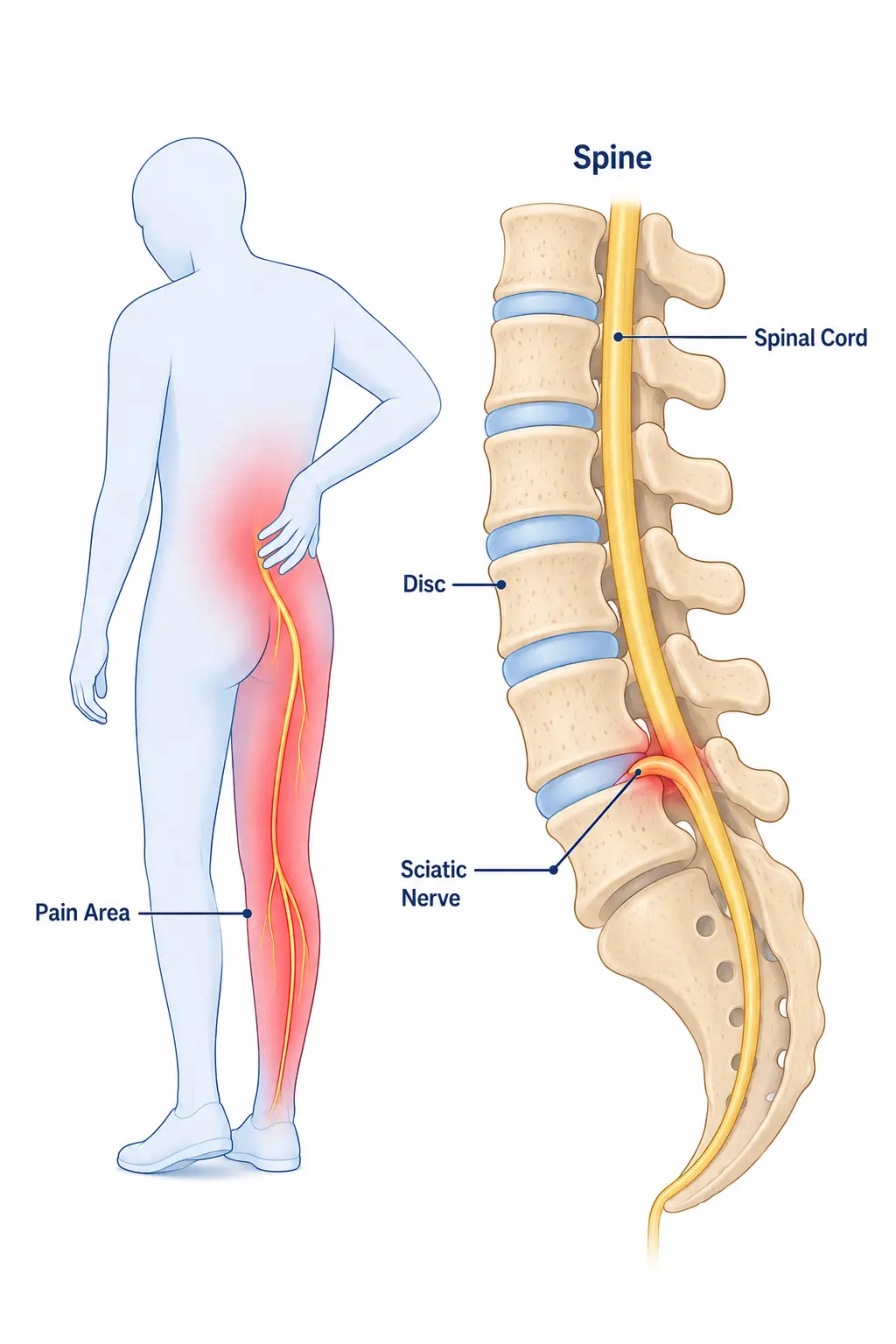
Types of Sciatica
Acute Sciatica
Acute sciatica develops suddenly and may last for a few weeks. It is commonly caused by disc irritation or temporary nerve inflammation.
Symptoms may include:
- Sudden lower back pain
- Radiating leg pain
- Difficulty sitting or bending
- Muscle tightness
Early evaluation by a sciatica specialist can help reduce inflammation and prevent chronic nerve irritation.
Chronic Sciatica
Chronic sciatica persists for several months and is often associated with degenerative spine conditions or ongoing nerve compression.
Common symptoms include:
- Persistent leg pain
- Numbness or weakness
- Difficulty walking long distances
- Reduced spinal flexibility
- Recurrent flare-ups
Treatment focuses on long-term pain relief, spinal stability, and nerve decompression
Bilateral Sciatica
In rare cases, both sciatic nerves may become affected, leading to symptoms in both legs. Bilateral sciatica may indicate significant spinal degeneration or severe nerve compression.
Prompt specialist evaluation is important in such cases to avoid worsening neurological symptoms.
Symptoms and Causes of Sciatica
| Symptoms | Causes |
|---|---|
Lower back pain |
Herniated discs |
Sharp or burning pain radiating down the leg | |
Pain in the buttocks or hips |
Bone spurs |
Tingling sensation in the leg or foot |
Spinal stenosis |
Numbness in the lower limb |
Poor posture |
Muscle weakness |
Sedentary lifestyle |
Difficulty walking or standing |
Obesity |
Pain while sitting for prolonged periods |
Repetitive spinal strain |
Reduced mobility and flexibility |
Heavy lifting injuries |
Electric shock-like pain during movement |
Age-related degeneration |
Surgical & Non Surgical Treatment for Sciatica
Many patients improve with conservative treatment guided by our experienced sciatica specialist.
Physiotherapy and Rehabilitation
Targeted physiotherapy helps strengthen spinal muscles, improve posture, reduce nerve pressure, and restore flexibility.
Medication Management
Anti-inflammatory medications and pain management strategies may help reduce discomfort during recovery.
Lifestyle and Ergonomic Correction
Our specialists guide patients on posture correction, ergonomic support, spinal care habits, and activity modification.
Spine Injections
Image-guided injections may help reduce inflammation around irritated nerves in selected patients.
Advanced Pain Management
Comprehensive pain management focuses on improving mobility, reducing nerve irritation, and supporting long-term spinal health.
Minimally Invasive Spine Surgery
Modern minimally invasive procedures involve smaller incisions and reduced muscle disruption.
Robotic and Navigation-Guided Spine Surgery
Advanced robotic and navigation-assisted systems help improve precision during complex spine procedures.
Spinal Decompression Surgery
Decompression surgery relieves pressure on compressed nerves caused by disc prolapse or spinal narrowing.
Spinal Fusion and Stabilisation
In selected cases involving spinal instability, stabilisation procedures may help restore spinal alignment and long-term support.
Why Choose We Are Spine?
Experienced Sciatica Specialists
Our team includes experienced spine surgeons in Mumbai and specialists with expertise in advanced spine care and minimally invasive treatment for nerve-related spinal disorders.

Dr. Shekhar Bhojraj
CONSULTANT SPINE SURGEON

Dr. Abhay Nene
CONSULTANT SPINE SURGEON

Dr. Sheetal Mohite
CONSULTANT SPINE SURGEON

Dr. Premik Nagad
CONSULTANT SPINE SURGEON

Dr. Priyank Patel
CONSULTANT SPINE SURGEON

Dr. Aaditya Kashikar
CONSULTANT SPINE SURGEON
Frequently Asked Questions
Is Sciatica 100% Curable?
Sciatica is not always completely curable, but many people experience significant improvement with proper treatment and lifestyle changes. In many cases, symptoms improve over time as inflammation around the sciatic nerve reduces. Treatment may include physiotherapy, stretching exercises, yoga, medications, posture correction, and activity modification. The outcome often depends on the underlying cause, severity of nerve compression, and overall spine health.
Which Doctor Is Best for Sciatica?
Sciatica is commonly treated by orthopedic spine specialists, neurosurgeons, spine surgeons, physiotherapists, and pain management doctors. A spine specialist is usually consulted when symptoms are severe, persistent, or associated with numbness, weakness, or difficulty walking. Proper diagnosis helps determine the most suitable treatment plan for long-term symptom management.
What Test Confirms Sciatica?
Sciatica is usually diagnosed through a clinical examination along with imaging tests when needed. MRI scans are commonly used to identify disc problems, nerve compression, or spinal degeneration affecting the sciatic nerve. In some cases, X-rays, CT scans, or nerve conduction studies may also be recommended to evaluate the condition further and rule out other causes of leg pain.
What Are Stage 4 Sciatica Symptoms?
Sciatica is commonly caused by irritation or compression of the sciatic nerve. One of the most frequent causes is a slipped or herniated disc pressing on the nerve roots in the lower spine. Other causes may include spinal stenosis, degenerative disc disease, bone spurs, spinal injuries, or muscle tightness affecting the nerve pathway. Poor posture, obesity, and prolonged sitting may also contribute to the condition.
What Is the Root Cause of Sciatica?
The last stage of spondylosis is typically characterized by severe degeneration of the spinal discs and joints along with chronic stiffness and nerve compression. In advanced cases, patients may develop difficulty walking, reduced mobility, persistent pain, muscle weakness, or problems with coordination and balance. Some individuals may also experience significant limitations in daily activities if the condition is left untreated for a long period.
How Long Will Sciatica Take to Go Away?
The duration of sciatica varies depending on the severity and underlying cause. Mild cases may improve within a few weeks with rest, physiotherapy, and activity modification, while more persistent cases may last for several months. Chronic sciatica associated with spinal degeneration or severe disc problems may require ongoing treatment and long-term management strategies.
What Foods Should I Avoid With Sciatica?
People with sciatica are often advised to limit foods that may contribute to inflammation and weight gain. Highly processed foods, sugary snacks, excessive fried foods, and high-fat fast foods may negatively affect overall spine and joint health. Maintaining a balanced diet with adequate hydration, fruits, vegetables, and nutrient-rich foods may help support recovery and general spinal wellness.
What Vitamin Deficiency Is Linked to Sciatica?
Vitamin B12 deficiency is sometimes associated with nerve-related symptoms that may resemble or worsen sciatica-like pain, numbness, or tingling sensations. Vitamin D deficiency may also contribute to muscle weakness and bone-related discomfort in some individuals. A proper medical evaluation can help determine whether nutritional deficiencies are contributing to symptoms alongside spinal conditions.