
L4-L5 Disc Bulge Treatment Without Surgery
If your MRI report shows an L4-L5 disc bulge, one of the first questions you may ask is whether surgery is necessary. The good news is that L4-L5 disc bulge treatment without surgery is successful for most patients. In many cases, symptoms improve through physiotherapy, exercise, pain management, activity modification, and lifestyle changes. Surgery is usually reserved for severe nerve compression, progressive weakness, loss of bowel or bladder control, or persistent symptoms that do not improve despite adequate conservative treatment.
Quick Answer
Yes. L4-L5 disc bulge treatment without surgery is the first-line approach recommended by most spine specialists worldwide. Research shows that many lumbar disc bulges improve over time with conservative treatment such as physiotherapy, targeted exercises, pain management, posture correction, weight management, and activity modification. Surgery is generally considered only when significant neurological symptoms, severe sciatica, or worsening nerve compression persist despite appropriate non-surgical care.
What Research Shows
Clinical guidelines from organizations such as:
- North American Spine Society (NASS)
- American Academy of Orthopaedic Surgeons (AAOS)
- National Institute for Health and Care Excellence (NICE)
Recommend conservative treatment as the initial management strategy for most lumbar disc bulges. Many patients experience significant improvement within several weeks to months.
What Is an L4-L5 Disc Bulge?
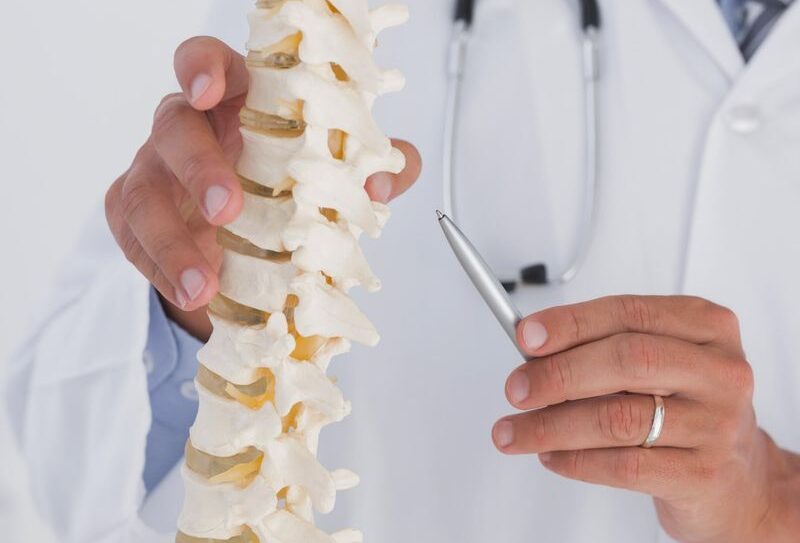
The spine consists of vertebrae separated by soft cushioning discs. The L4-L5 disc is located between the fourth and fifth lumbar vertebrae in the lower back.
A disc bulge occurs when the outer portion of the disc extends beyond its normal boundary. Unlike a complete disc herniation, the outer layer usually remains intact.
Why Is the L4-L5 Level Important?
The L4-L5 segment:
- Bears significant body weight
- Allows bending and twisting movements
- Experiences high mechanical stress
- Is one of the most common locations for lumbar disc bulges
When the bulging disc presses on nearby nerves, symptoms such as lower back pain, sciatica, numbness, and weakness may occur.
Symptoms of an L4-L5 Disc Bulge
Symptoms vary depending on whether the bulging disc is compressing a nerve.
Common Symptoms
Lower back pain
Pain radiating into the buttocks
Sciatica down one leg
Tingling sensations
Numbness in the leg or foot
Muscle weakness
Difficulty standing for long periods
Pain when sitting for extended durations
Symptoms Suggesting Nerve Compression
Sharp shooting leg pain
Foot weakness
Reduced sensation
Difficulty lifting the foot
Balance problems
Emergency Symptoms
Seek urgent medical care if you experience:
Loss of bladder control
Loss of bowel control
Numbness around the groin or saddle area
Rapidly worsening leg weakness
These may indicate cauda equina syndrome, a medical emergency.
Non-Surgical Treatment Options
| Treatment | Purpose | Typical Benefit |
|---|---|---|
| Physiotherapy | Improve movement and stability | Reduced pain |
| Exercise Therapy | Strengthen support muscles | Better function |
| Pain Management | Control symptoms | Improved comfort |
| Activity Modification | Reduce irritation | Faster recovery |
| Lifestyle Changes | Reduce spinal stress | Long-term improvement |
| Epidural Injections | Reduce inflammation | Temporary relief |
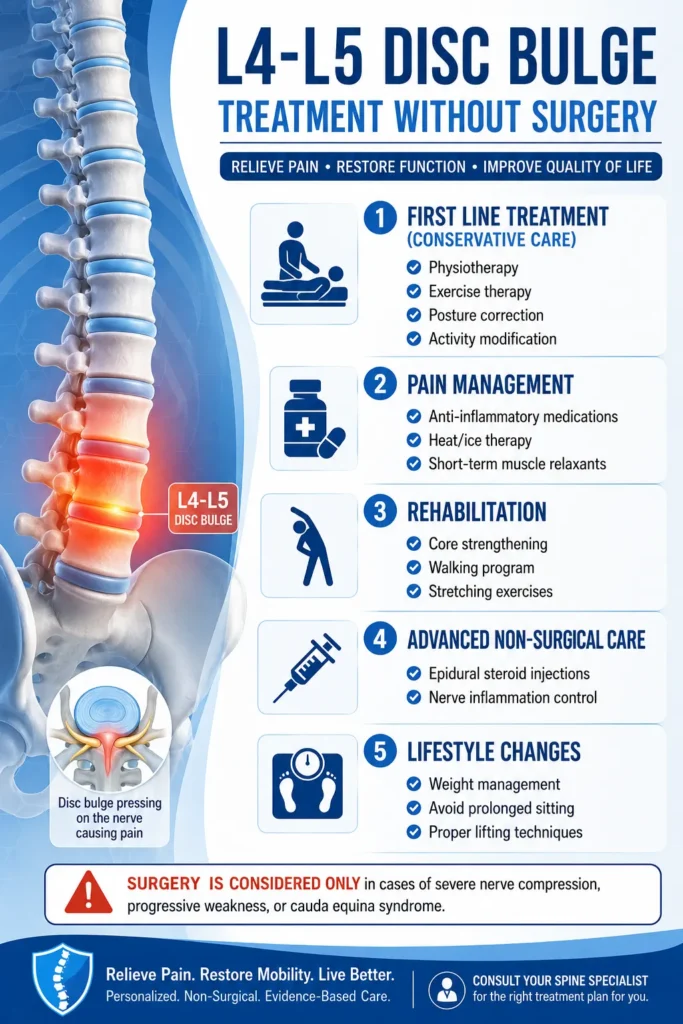
a) Physiotherapy
Physiotherapy is often the foundation of L4-L5 disc bulge treatment without surgery.
A physiotherapist may help by:
Improving spinal mobility
Reducing muscle spasm
Correcting posture
Strengthening core muscles
Teaching safe movement patterns
Benefits
Reduced lower back pain
Better flexibility
Improved function
Lower risk of recurrence
Evidence suggests that structured physiotherapy can significantly improve outcomes in patients with lumbar disc bulges.
b) Exercise Therapy
Exercise is a key component of L4-L5 disc bulge treatment
Specific exercises help:
Common Exercise Categories
McKenzie extension exercises
Core stabilization exercises
Pelvic tilts
Walking programs
Stretching routines
Exercise programs should be individualized and supervised when symptoms are significant.
c) Pain Management
Pain control can help patients remain active and participate in rehabilitation.
Options may include:
Acetaminophen (paracetamol)
Anti-inflammatory medications
Muscle relaxants when appropriate
Short-term prescription medications
Medication should always be used under medical supervision.
Pain relief alone is not sufficient; it should be combined with rehabilitation strategies.
d) Activity Modification
One of the most effective aspects of L4-L5 disc bulge treatment without surgery is reducing activities that aggravate symptoms.
Helpful modifications include:
Avoid prolonged sitting
Limit repetitive bending
Avoid heavy lifting
Use proper lifting mechanics
Take regular movement breaks
The goal is not complete rest but controlled activity.
e) Lifestyle Changes
Lifestyle adjustments can significantly improve recovery.
Weight Management
Excess weight increases stress on lumbar discs.
Benefits of maintaining a healthy weight:
Less pressure on the spine
Reduced inflammation
Improved mobility
Smoking Cessation
Smoking is associated with:
Poor disc nutrition
Slower healing
Increased back pain risk
Better Sleep Habits
Quality sleep supports tissue recovery and pain control.
f) Epidural Injections
When pain remains severe despite conservative treatment, epidural steroid injections may be considered.
Purpose
These injections aim to:
Reduce nerve inflammation
Decrease pain
Improve mobility
Important Note
Epidural injections do not repair the disc itself.
They are typically used to:
Control symptoms
Facilitate rehabilitation
Delay or avoid surgery when appropriate
Recovery Timeline
How Long Does Recovery Take?
Recovery varies based on:
Age
Overall health
Severity of nerve compression
Adherence to treatment
Typical Timeline
Most successful L4-L5 disc bulge treatment without surgery programs require patience and consistency.
Myth vs Fact
| Myth | Fact |
|---|---|
| Every disc bulge needs surgery. | Most improve with conservative treatment. |
| Bed rest is the best treatment. | Prolonged bed rest can worsen recovery. |
| MRI findings always match pain severity. | MRI findings do not always correlate with symptoms. |
| Exercise is dangerous. | Appropriate exercise is often beneficial. |
| Pain means permanent damage. | Pain often improves even when MRI changes remain. |
Even mild scoliosis may become painful with aging because of joint stress and muscle imbalance.
So while progression varies between individuals, the answer to does scoliosis get worse with age is still yes for many adults.
Patient Decision-Making Guide
You May Be a Good Candidate for Non-Surgical Treatment If:
✓ Symptoms are mild to moderate
✓ No significant muscle weakness
✓ No bowel or bladder problems
✓ Pain improves with movement
✓ Symptoms are stable or improving
You Should Seek Specialist Evaluation If:
✓ Severe sciatica persists
✓ Symptoms worsen
✓ Weakness develops
✓ Walking becomes difficult
✓ Daily function declines
Frequently Asked Questions
Can an L4-L5 disc bulge heal naturally?
Yes. Many patients improve through L4-L5 disc bulge treatment without surgery and natural healing processes.
Is walking good for an L4-L5 disc bulge?
Yes. Walking is generally considered beneficial when tolerated.
What is the best sleeping position?
Sleeping on the back with a pillow under the knees or on the side with a pillow between the knees often helps.
Can I exercise with a disc bulge?
Yes, but exercises should be appropriate and guided by a healthcare professional.
Is sitting bad for an L4-L5 disc bulge?
Prolonged sitting may aggravate symptoms in some individuals
Is sciatica common with an L4-L5 disc bulge?
Yes. Nerve irritation at this level frequently causes sciatica.
What causes an L4-L5 disc bulge?
Age-related degeneration, repetitive strain, poor lifting techniques, and injuries are common causes.
Does a disc bulge always cause pain?
No. Some MRI findings are present even in people without symptoms.
Still Struggling With L4-L5 Disc Bulge Pain?
If your MRI shows an L4-L5 disc bulge and you’re experiencing lower back pain, sciatica, numbness, or leg weakness, an early evaluation can help prevent symptoms from worsening.
Our spine specialists can review your MRI findings, assess nerve compression, and recommend the most appropriate treatment plan, including physiotherapy, rehabilitation, pain management, and other non-surgical options whenever possible.
Our team includes experienced spine specialists in Mumbai, India:
Book Appointment
Conclusion
- L4-L5 disc bulge treatment without surgery is effective for many patients.
- Most lumbar disc bulges improve with conservative treatment.
- Physiotherapy, rehabilitation, exercise therapy, and lifestyle changes play a major role in recovery.
- Walking and core strengthening are often beneficial.
- MRI findings should be interpreted alongside symptoms and physical examination.
- Surgery is typically reserved for severe nerve compression, progressive weakness, cauda equina syndrome, or persistent disabling symptoms.
- Seek urgent medical attention for bowel or bladder dysfunction, saddle numbness, or rapidly worsening weakness.
- A qualified spinal specialist can help determine the most appropriate treatment plan based on your symptoms and MRI findings.
For most patients, L4-L5 disc bulge treatment without surgery should be the first approach. Evidence-based conservative treatment, combined with physiotherapy and rehabilitation, can significantly reduce lower back pain, sciatica, and nerve compression symptoms while helping many people avoid surgery altogether.



8 Responses