

Lumbar Spondylosis Exercises:
Best Exercises to Reduce Pain and Improve Mobility
Lumbar spondylosis exercises are one of the most effective non-surgical treatments for reducing lower back pain, improving flexibility, and restoring movement. Regular exercise therapy helps strengthen the muscles supporting the lumbar spine, reduces lower back stiffness, improves posture, and may decrease the risk of future flare-ups.
The best lumbar spondylosis exercises typically include pelvic tilts, knee-to-chest stretches, cat-camel movements, core strengthening exercises, and walking. However, exercises should be performed carefully and stopped if they worsen symptoms or trigger nerve compression symptoms such as leg pain, numbness, or weakness.
What Is an L4-L5 Disc Bulge?
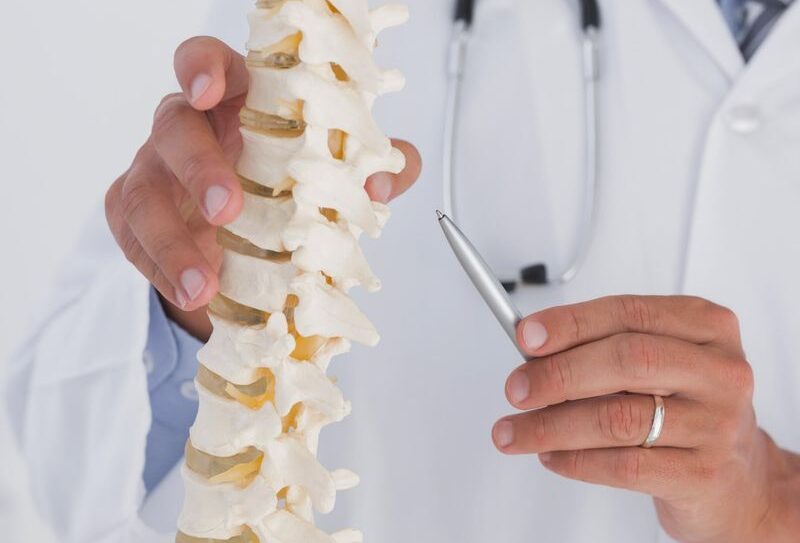
The spine consists of vertebrae separated by soft cushioning discs. The L4-L5 disc is located between the fourth and fifth lumbar vertebrae in the lower back.
A disc bulge occurs when the outer portion of the disc extends beyond its normal boundary. Unlike a complete disc herniation, the outer layer usually remains intact.
What Is Lumbar Spondylosis?
Lumbar spondylosis refers to age-related wear and tear affecting the bones, discs, joints, and ligaments of the lower spine.
It is a common form of degenerative spine disease and becomes more frequent with increasing age.
Changes may include:
- Disc degeneration
- Bone spur formation
- Joint arthritis
- Reduced spinal flexibility
- Narrowing around the spinal nerves
Many people with lumbar spondylosis experience:
- Chronic lower back pain
- Lower back stiffness
- Difficulty bending
- Reduced mobility
- Muscle tightness
In some cases, nerve compression may develop, causing symptoms that radiate into the legs.
Can Exercise Help Lumbar Spondylosis?
Yes.
Exercise helps by:
- Strengthening spinal support muscles
- Improving flexibility
- Increasing blood circulation
- Reducing joint stiffness
- Enhancing spinal stability
- Supporting rehabilitation
- Improving daily function
Most spine specialists and physiotherapists recommend lumbar spondylosis exercises as a key part of treatment.
Benefits of Lumbar Spondylosis Exercises
Regular lumbar spondylosis exercises provide several important benefits.
- Reduced Back Pain Movement helps maintain joint health and decreases pain caused by stiffness.
- Better Flexibility Stretching improves mobility in the lumbar spine and surrounding muscles.
- Improved Posture Strong core muscles support proper spinal alignment.
- Reduced Lower Back Stiffness. Gentle movement prevents joints from becoming excessively stiff.
- Enhanced Rehabilitation Exercise therapy accelerates recovery and improves long-term outcomes.
- Improved Daily Function. Patients often find walking, standing, and sitting easier after regular exercise.
Best Lumbar Spondylosis Exercises
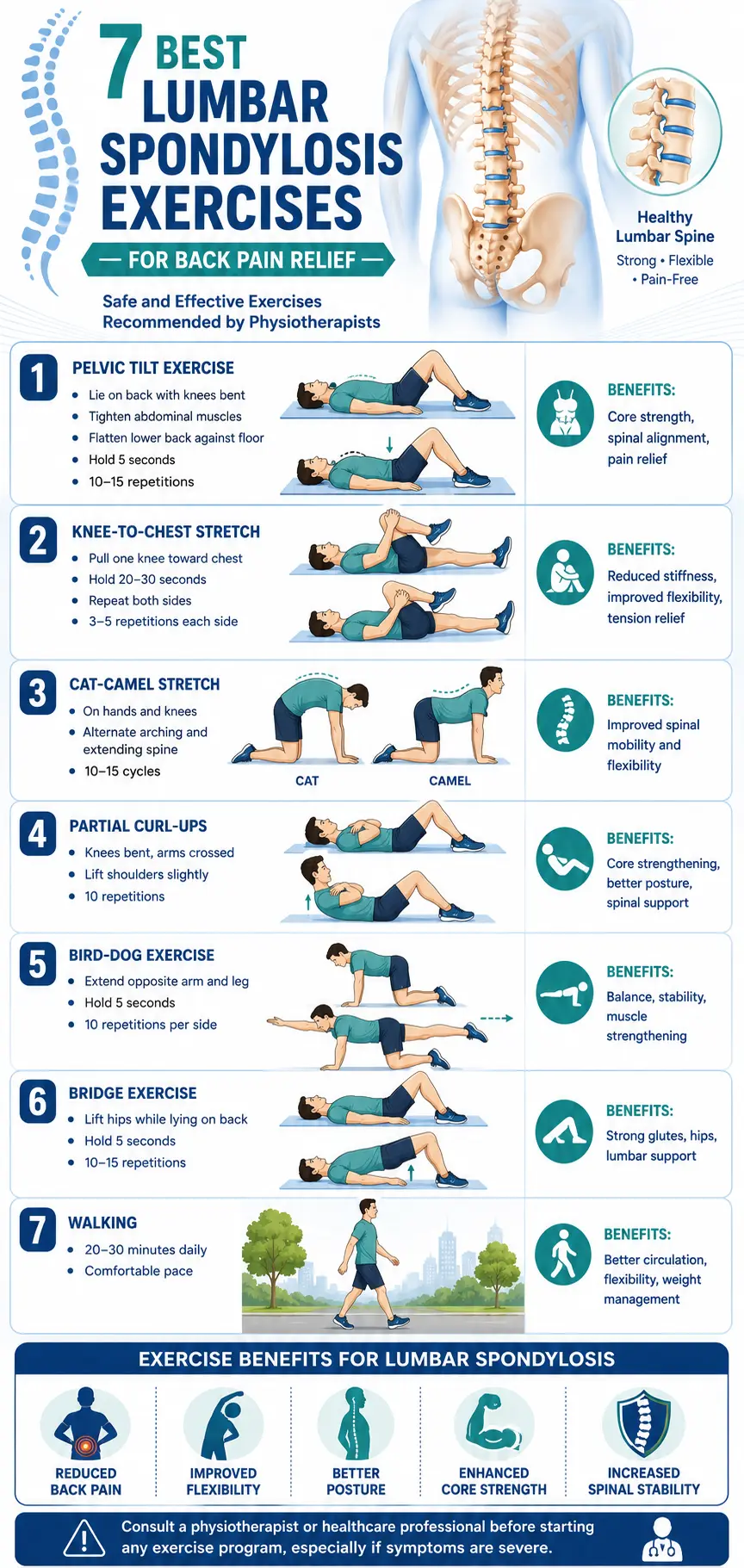
The following lumbar spondylosis exercises are commonly recommended by physiotherapists and spine rehabilitation specialists.
1. Pelvic Tilt Exercise
Pelvic tilts help strengthen abdominal muscles and improve lumbar spine stability.
How to Perform
Lie on your back with knees bent.
Tighten abdominal muscles.
Flatten your lower back against the floor.
Hold for 5 seconds.
Relax.
Repetitions
10–15 repetitions.
Benefits
Improves core strength
Supports lumbar spine alignment
Reduces lower back pain
2. Knee-to-Chest Stretch
This stretch reduces lower back stiffness and improves flexibility.
Steps
Lie on your back.
Pull one knee toward your chest.
Hold for 20–30 seconds.
Repeat on the opposite side.
Repetitions
3–5 times per side.
Benefits
Relieves tension
Improves mobility
Reduces stiffness
3. Cat-Camel Stretch
One of the most popular lumbar spondylosis exercises for spinal mobility.
Steps
Start on hands and knees.
Arch your back upward.
Slowly lower and extend the spine.
Repeat smoothly.
Repetitions
10–15 cycles.
Benefits
Improves flexibility
Promotes spinal movement
Helps reduce stiffness
4. Partial Curl-Ups
These lumbar spondylosis exercises strengthen the abdominal muscles without excessive spinal stress.
Steps
Lie on your back.
Bend your knees.
Cross arms over chest.
Lift shoulders slightly.
Repetitions
10 repetitions.
Benefits
Core strengthening
Better spinal support
Improved posture
5. Bird-Dog Exercise
A highly effective exercise therapy technique.
Steps
Start on hands and knees.
Extend one arm forward.
Extend the opposite leg backward.
Hold for 5 seconds.
Repetitions
10 per side.
Benefits
Enhances balance
Improves spinal stability
Strengthens supporting muscles
6. Bridge Exercise
Bridge exercises strengthen the hips, glutes, and lower back muscles.
Steps
Lie on your back.
Bend your knees.
Lift hips slowly.
Hold for 5 seconds.
Lower gradually.
Repetitions
10–15 repetitions.
Benefits
Strengthens posterior chain muscles
Improves lumbar spine support
Reduces mechanical back pain
7. Walking
Walking is one of the safest lumbar spondylosis exercises for most individuals.
Benefits
Improves circulation
Promotes flexibility
Supports rehabilitation
Helps maintain a healthy weight
Aim for:
20–30 minutes daily
Comfortable pace
Supportive footwear
How Often Should You Perform Lumbar Spondylosis Exercises?
Most rehabilitation programs recommend:
- Stretching: Daily
- Strengthening Exercises: 3–5 times weekly
- Walking: Most days of the week
Consistency is more important than intensity. Start gradually and increase activity under professional guidance.
Exercises to Avoid With Lumbar Spondylosis
Some movements may worsen symptoms.
Avoid:
- Heavy deadlifts without supervision
- Deep forward bending
- High-impact jumping activities
- Sudden twisting motions
- Heavy weightlifting during flare-ups
- Sit-ups that strain the spine
Lifestyle Tips That Enhance Results
Along with lumbar spondylosis exercises, consider:
- Maintain a Healthy Weight: Excess weight increases stress on the lumbar spine.
- Improve Sitting Posture: Use ergonomic chairs and lumbar support.
- Stay Active: Avoid prolonged bed rest.
- Lift Properly: Use your legs rather than bending from the waist.
- Sleep Comfortably: Choose a supportive mattress and sleeping position.
When to See a Doctor
Seek medical evaluation if lumbar spondylosis symptoms include:
- Persistent severe back pain
- Pain radiating down the leg
- Numbness or tingling
- Muscle weakness
- Difficulty walking
- Balance problems
- Loss of bladder or bowel control
- Symptoms that worsen despite exercise therapy
Frequently Asked Questions
Can lumbar spondylosis exercises cure the condition?
No. Lumbar spondylosis is a degenerative spine condition. However, lumbar spondylosis exercises can significantly reduce symptoms, improve function, and enhance quality of life.
Is walking good for lumbar spondylosis?
Yes. Walking is a low-impact activity that supports rehabilitation, improves circulation, and helps reduce lower back stiffness.
How long does it take for lumbar spondylosis exercises to work?
Many patients notice improvement within 4–8 weeks of consistent exercise therapy, although individual results vary.
Can exercise make lumbar spondylosis worse?
Incorrect exercises or excessive intensity may worsen symptoms. Lumbar spondylosis exercises should be performed carefully and ideally under physiotherapy guidance.
Struggling with Lower Back Pain Despite Doing Exercises?
Lumbar spondylosis can cause persistent back pain, stiffness, and reduced mobility. While exercises are an important part of treatment, the right exercise program depends on the severity of your condition, symptoms, and MRI findings.
If your pain is not improving or you’re unsure which exercises are safe for you, a consultation with a spine specialist can help you avoid worsening symptoms and develop an effective recovery plan.
Our team includes experienced spine specialists in India:
Conclusion
Lumbar spondylosis exercises are a cornerstone of non-surgical treatment for lower back pain, lower back stiffness, and reduced mobility caused by degenerative changes in the lumbar spine. Regular exercise therapy helps strengthen supporting muscles, improve flexibility, reduce discomfort, and support long-term rehabilitation. When combined with physiotherapy, good posture, and an active lifestyle, these exercises can help many people manage lumbar spondylosis effectively and maintain a better quality of life.






6 Responses