
Why Is My Lower Back So Stiff? Common Causes and What Helps
A stiff lower back is most often linked to long periods without movement, muscle tension or a minor strain, and it usually settles with gentle activity. Less often, stiffness points to age-related wear in the spine or to an inflammatory condition that needs medical treatment. This article explains the common causes, how the timing of your stiffness can offer clues, which gentle stretches are commonly used, and when to see a doctor.
Common causes of lower back stiffness
- Sitting or staying still for long periods: Joints and muscles tend to stiffen when they stay in one position. Stiffness after a long drive, a desk day or a night in bed is common.
- Muscle strain or tension: A strain from lifting, twisting or an unusual activity can make the muscles beside the spine tight and sore.
- Poor posture and low activity: Slouching, a weak core and tight hips can add strain to the lower back.
- Age-related wear: Over time, discs and joints in the spine change. This is often called lumbar spondylosis. See lumbar spondylosis symptoms and spine osteoarthritis.
- Disc problems: A bulging or worn disc can cause stiffness and pain, sometimes with leg symptoms. See slipped disc.
- Inflammatory back conditions: Conditions such as ankylosing spondylitis can cause long-lasting morning stiffness. They often begin in younger adults.
- Stress and poor sleep: Tension can tighten the muscles of the back, and poor sleep can make pain feel worse. See can stress cause back pain.
- Extra body weight and pregnancy: Both change the load on the lower back.
- Conditions outside the spine: Some kidney, pelvic or gynaecological conditions can cause back discomfort. These usually come with other symptoms.
What your pattern of stiffness may suggest
These are clues, not a diagnosis.
- Stiff after sitting or resting, and eases within minutes of moving: often related to inactivity, muscle tightness or mild joint wear.
- Stiff in the morning for a short time, then loosens up: common with age-related wear.
- Stiff in the morning for more than about 30 minutes, improves with exercise rather than rest, and may wake you in the second half of the night: can be a pattern seen in inflammatory back conditions. This is a reason to see a doctor, especially if it started before middle age and has lasted for weeks or months.
- Stiffness with pain that travels down the leg, numbness or weakness: may involve a nerve. See sciatica.
- Stiffness that began after a fall or injury: needs to be checked.
What are the symptoms of a strained back muscle?
A strained back muscle commonly causes:
- A dull or sharp ache in the lower back, often on one side
- Tenderness when you press on the area
- Muscle spasms or tightness
- Pain or stiffness that is worse with movement, bending or lifting
- Difficulty standing up straight for a short while
A simple strain often improves over days to a few weeks. Leg numbness, weakness or pain travelling below the knee are not typical of a simple strain and should be assessed.
What helps a stiff lower back?
- Keep moving. Gentle walking and regular position changes are usually more helpful than long rest.
- Break up sitting. Stand, walk or stretch about every 30 minutes.
- Use warmth. A warm shower or a heating pad on a comfortable setting may ease tightness. Always keep it warm, not hot.
- Try gentle stretches (see below).
- Look at your sleep and set-up. A supportive mattress and pillow position, and a chair that supports your lower back, suit many people.
- Build strength gradually. Regular core and hip exercises support the spine. A physiotherapist can guide you. See back pain exercises at home and lumbar spondylosis exercises.
What stretches can I do for lower back stiffness?
Move slowly, stay within a comfortable range, do not bounce, and stop if the pain increases or spreads into your leg.
- Knee-to-chest stretch: Lie on your back and gently bring one knee toward your chest. Hold for 15 to 30 seconds, then switch sides.
- Lower trunk rotation: Lie on your back with your knees bent and let both knees fall gently to one side, then the other.
- Cat-camel: On hands and knees, slowly round your back and then lower it toward a neutral position.
- Hip flexor stretch: Kneel on one knee and gently shift your weight forward until you feel a stretch at the front of the hip. Hold, then switch.
These are general ideas. If you have a diagnosed spine condition, ask your doctor or physiotherapist which movements suit you.
What is the McKenzie method for back pain?
The McKenzie method, also called Mechanical Diagnosis and Therapy, is an approach used by trained physiotherapists. It involves assessing how your pain responds to certain repeated movements and positions, then using those movements as exercises. Research on it is mixed. A systematic review found some evidence of a small benefit over passive treatments in acute low back pain, and limited evidence for long-lasting pain. Because the right movements depend on your type of pain, it is best done with a trained therapist.
Is lower back pain genetic?
Genes may play a part. Twin studies suggest that inherited factors contribute to back pain, but estimates vary widely between studies. A systematic review of twin studies also linked back pain with factors you can influence, such as smoking and body weight. A family history does not mean you will have a stiff back, and staying active and looking after your general health still matters.
When to see a doctor
Seek medical advice if your stiffness comes with any of the following:
- Difficulty controlling urine or stool, or numbness around the groin or inner thighs. This can be an emergency, so go to a hospital straight away.
- Weakness, numbness or tingling in one or both legs, especially if it is getting worse
- Pain after a fall, accident or injury
- Fever, chills or night sweats
- Unexplained weight loss, or a history of cancer
- Morning stiffness that lasts longer than about 30 minutes for several weeks, or pain that wakes you at night
- Swollen, red or painful joints elsewhere in the body
- Stiffness that has not improved after a few weeks of self-care
If you are not sure whom to see, read which doctor to consult for back pain.
Frequently asked questions
Why is my lower back so stiff in the morning? Short-lived morning stiffness that loosens within minutes of moving is common. Stiffness that lasts for more than about half an hour for weeks, or that wakes you at night, is worth having checked.
Is a stiff back the same as a strained muscle? Not always. A strain is one possible cause, but stiffness can also come from inactivity, joint wear or other conditions.
Is walking good for a stiff lower back? Gentle walking is commonly advised. If it brings on leg pain, numbness or weakness, stop and speak to a doctor.
Check your spine health
To understand which daily habits may affect your back, try the Spine Health Quiz. It is for information only and does not replace a medical examination. If you are in Mumbai and would like a consultation, you can use the appointment page.
Disclaimer: This article is for general information. It is not medical advice, a diagnosis or a substitute for treatment. Please speak to a qualified doctor about your symptoms.
-
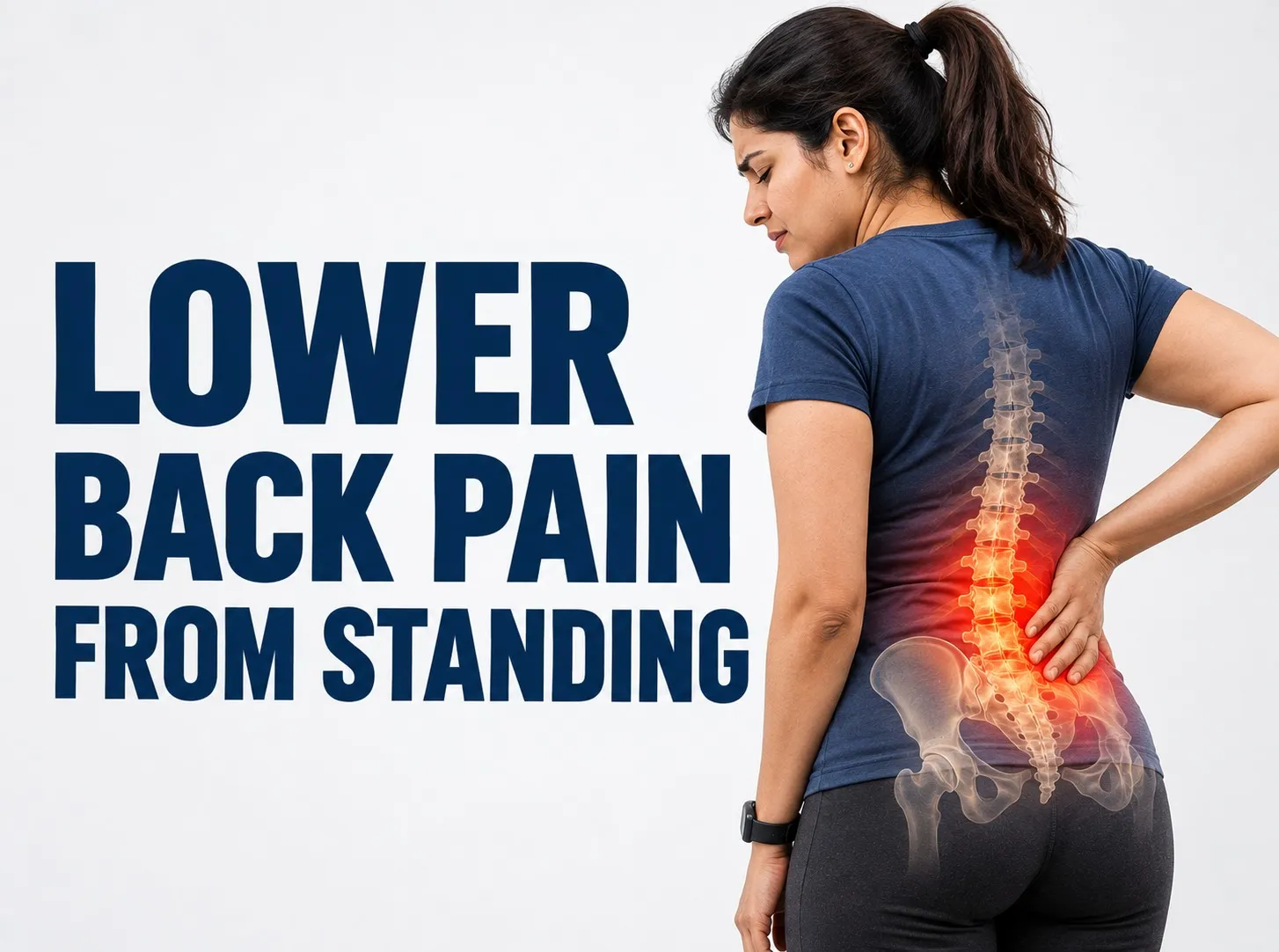
 Lower Back Pain When Standing? - Copy
-
 Lower Back Pain When Standing?
-
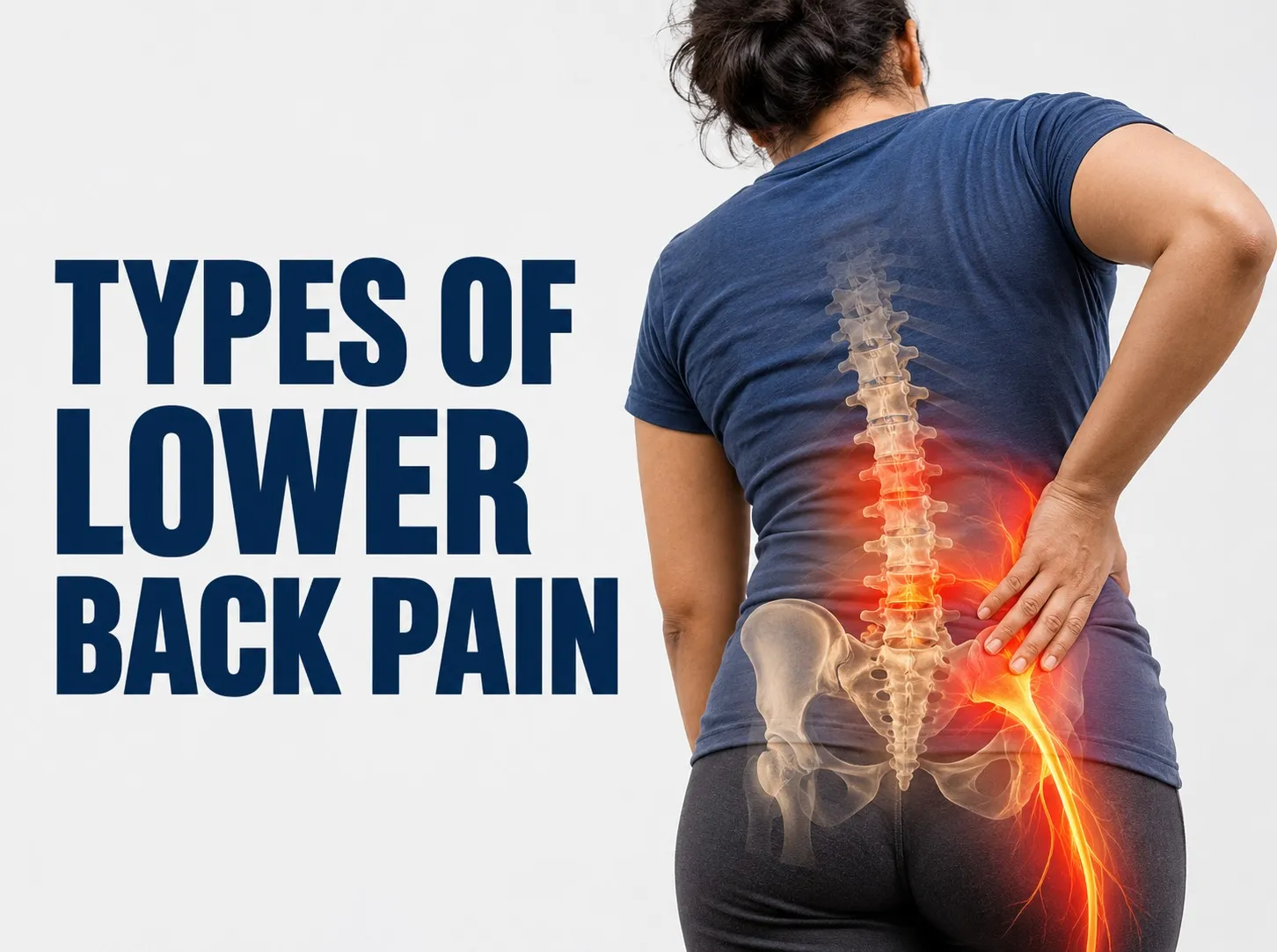
Types of Lower Back Pain: Causes, Symptoms and When to See a Doctor
-
 Is Heat Good for Back Pain? When It Helps and How to Use It Safely
-
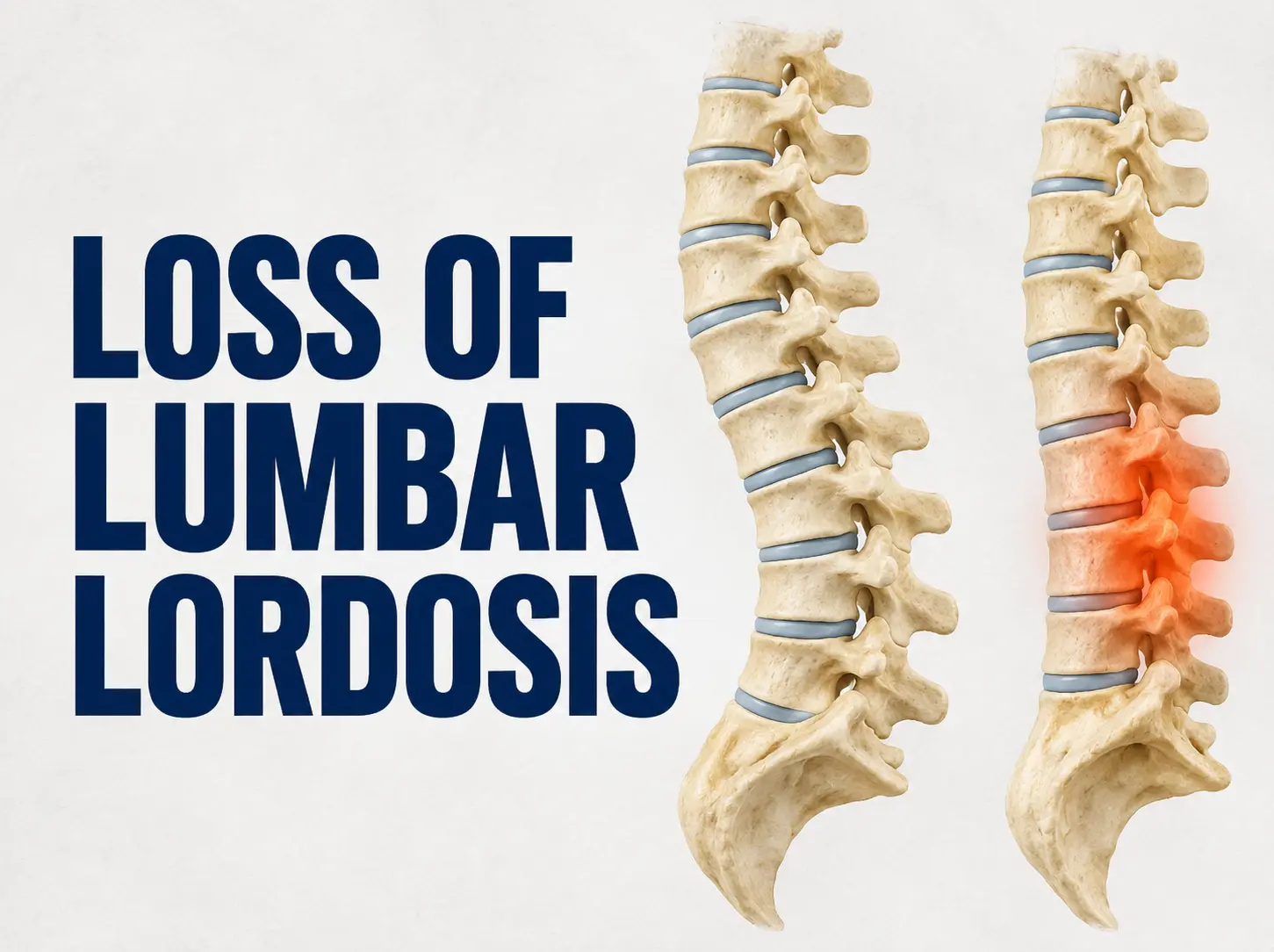
Loss of Lumbar Lordosis: Causes, Symptoms and Treatment
-
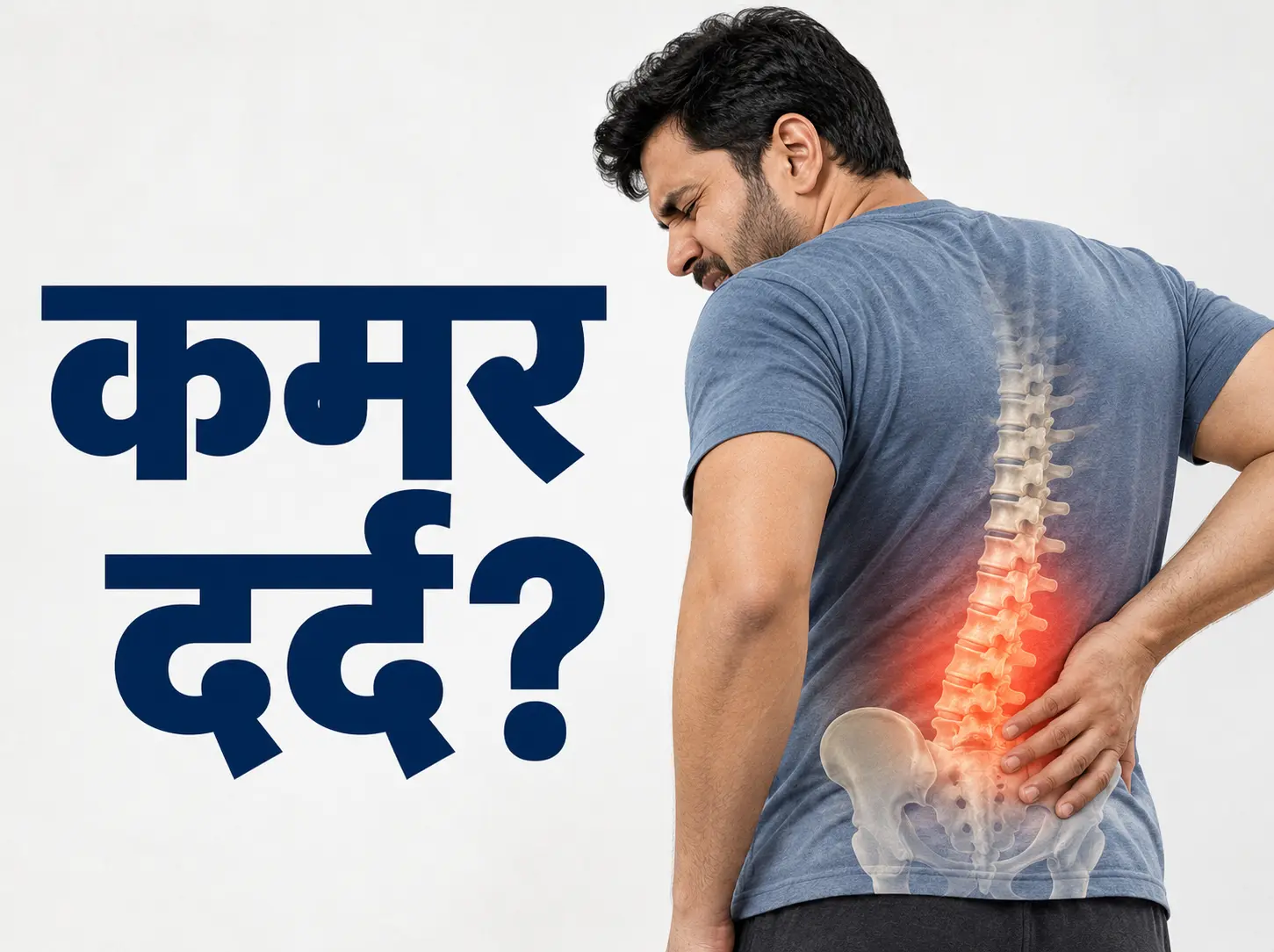
कमर दर्द: कारण, घरेलू उपाय और कब डॉक्टर को दिखाएं
-
 Slipped disc treatment without surgery