Loss of Lumbar Lordosis: Causes, Symptoms and Treatment
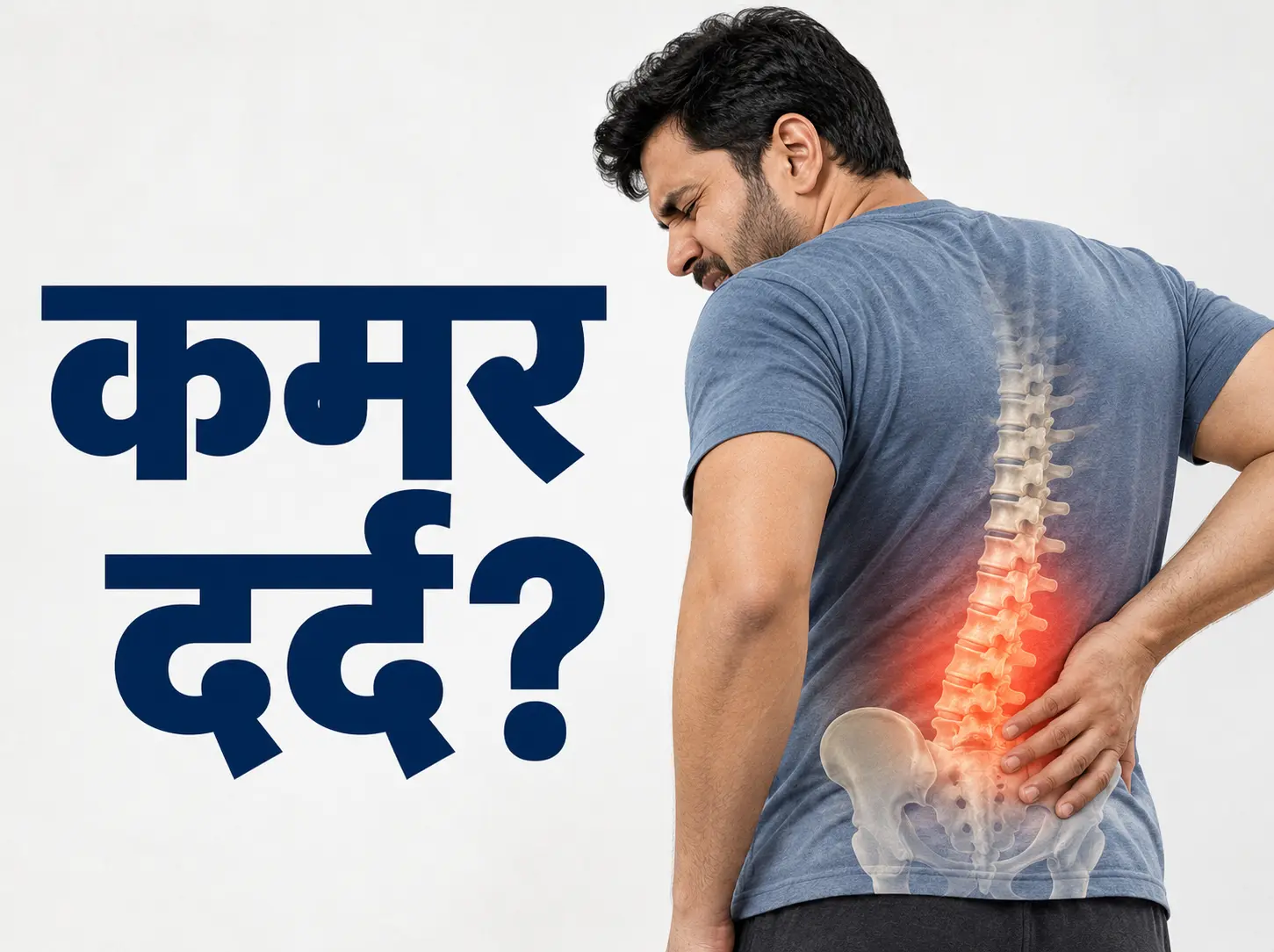
If your X-ray or MRI report mentions “loss of lumbar lordosis” or “straightening of the lumbar spine”, the wording can sound worrying. It is a description of the shape of your lower back, not a disease on its own. In some people it is linked to muscle spasm during an episode of back pain and may change as the pain settles. In others it is linked to longer-standing changes, such as disc wear or earlier spine surgery. This article explains what the term means, the common causes, possible symptoms, how doctors assess it, and when to seek medical advice.
What is lumbar lordosis?
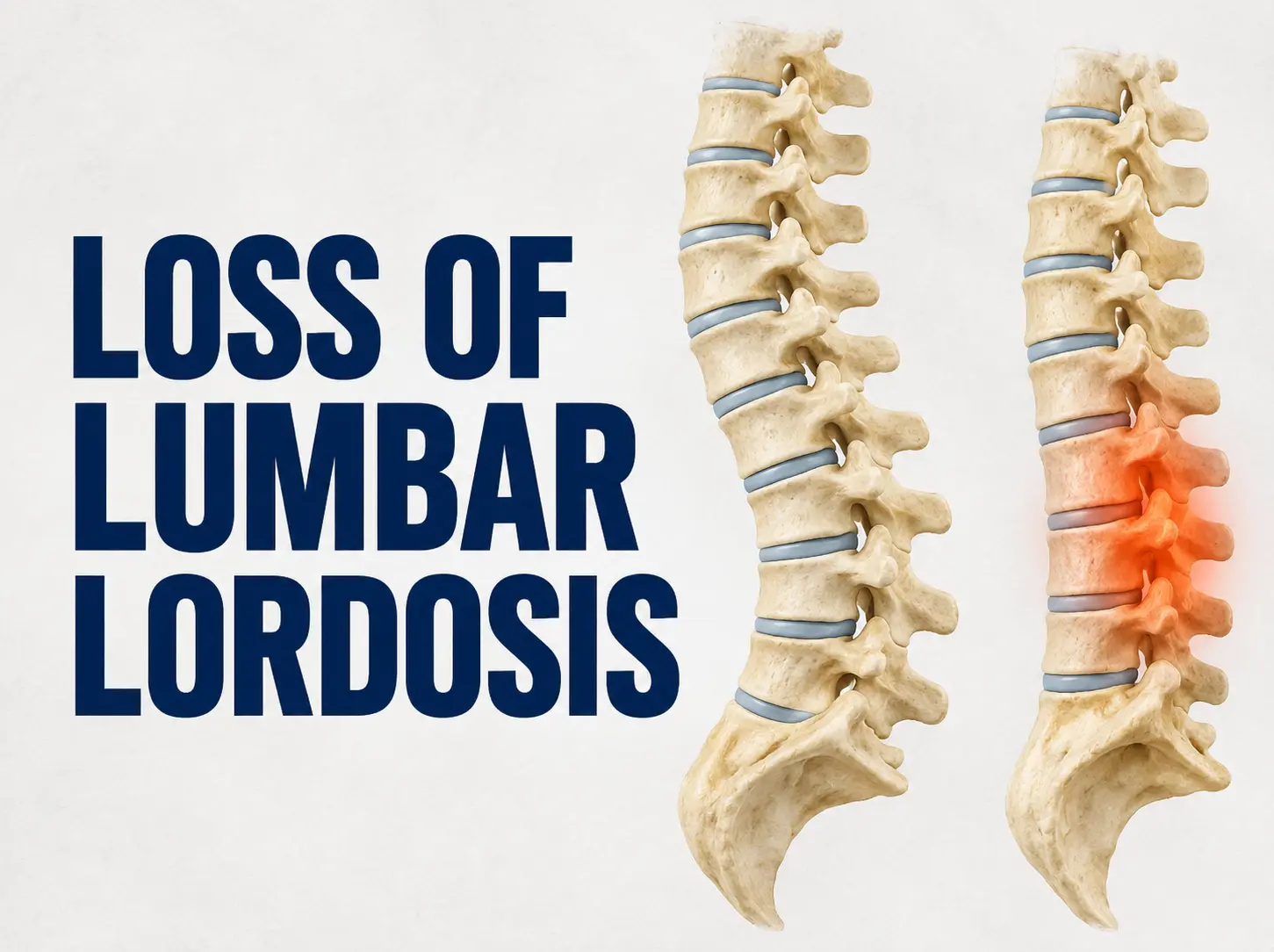
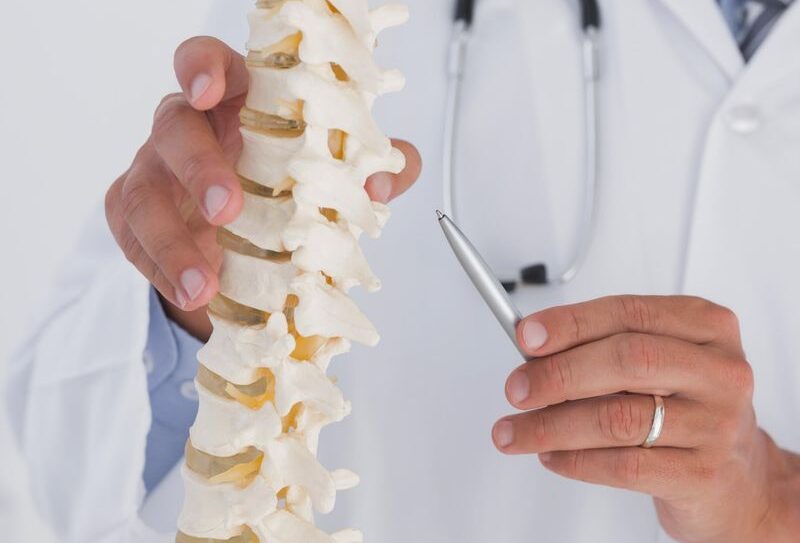
The spine is not straight. When viewed from the side, it has natural curves. Lumbar lordosis is the gentle inward curve of the lower back. This curve helps the spine share load and keeps the body balanced when you stand, walk and bend.
Doctors usually measure the curve on a standing side-view X-ray, as the angle between the top of the lumbar spine (L1) and the base of the spine (S1). There is no single number that applies to everyone. Commonly quoted ranges differ between studies, and the curve varies with age, sex, body build and posture.
What does loss of lumbar lordosis mean?
Loss of lumbar lordosis means the natural inward curve of the lower back looks flatter than expected. You may also see it described as straightening of the lumbar lordosis, lumbar hypolordosis or a flat lower back. In some cases the curve looks straight or even slightly reversed.
It is a finding on examination or imaging, not a diagnosis. The useful question for you and your doctor is why the curve looks flat, and whether it is related to your symptoms.
Common causes of loss of lumbar lordosis
The causes fall into two broad groups: changes that tend to be temporary, and changes that tend to be structural and longer lasting.
Temporary or functional causes
- Muscle spasm: After a strain, or during an episode of acute low back pain, the muscles beside the spine can tighten and pull the lower back flat. This is one of the most common reasons the curve looks reduced on an X-ray.
- Pain-related posture: People sometimes lean forward or stand stiffly to avoid pain, which changes how the spine is held.
- Imaging position: An MRI is taken lying down, while an X-ray is often taken standing, so the curve can look different between the two.
Structural causes
- Disc degeneration or a slipped disc: Changes in the discs can alter how the lower spine is aligned.
- Earlier spine surgery: After a fusion, the lower spine can sometimes end up flatter than before. Doctors may call this flat back syndrome.
- Ankylosing spondylitis: This inflammatory condition can stiffen the spine and reduce its normal curves.
- Spondylolisthesis: Forward slipping of one vertebra over another can affect alignment.
- Compression fractures: Weakened bones, for example from osteoporosis, can change the shape of the spine.
- Age-related changes: Joints, discs and bones change over time. See also lumbar spondylosis symptoms.
Long hours of sitting and low physical activity are often discussed as contributors, but research on this link is mixed. Having a risk factor does not mean the curve will flatten, and many people with a flatter lower back have no identifiable risk factor.
Symptoms
Many people with a flatter lumbar curve have no symptoms. When symptoms are present, they may include:
- Low back pain or stiffness, especially after standing or walking for a while
- Difficulty standing fully upright
- A stooped or forward-leaning posture
- Muscle tightness in the back, hips or thighs
- Tiring quickly when standing
Pain that travels down the leg, numbness or weakness points to nerve irritation, which needs its own evaluation. Read more about sciatica.
Is loss of lumbar lordosis serious?
It depends on the cause. A mild change found by chance on a scan is not necessarily a problem. When the flattening is due to muscle spasm, it often changes as the spasm settles. It is more important when symptoms are persistent, when the posture is noticeably stooped, or when an underlying condition is involved. Your doctor looks at the whole picture, not just the angle on the report.
How is it diagnosed?
Assessment usually begins with a conversation and a physical examination.
- History: when the pain began, what makes it better or worse, any injury, earlier surgery or other medical conditions.
- Examination: how you stand and move, tenderness or muscle tightness, and a check of strength, sensation and reflexes.
- X-ray: a standing side-view X-ray to measure the curve. A longer view of the whole spine may be used when overall balance needs to be assessed.
- MRI: considered when disc or nerve problems are suspected.
Not everyone needs every test. Your doctor decides what is appropriate based on your symptoms.
Treatment options
Treatment depends on the cause, how severe the symptoms are and how much they affect daily life. The aim is usually to manage pain and improve movement and function, rather than to change a number on a report.
- Spasm-related flattening: staying gently active, heat, physiotherapy, and medicines if your doctor advises them. The curve often changes as the pain settles.
- Physiotherapy: a physiotherapist can assess posture and movement and design a programme that may include stretching tight hip and thigh muscles, strengthening the core and back muscles, and movement training. Whether the measured curve itself changes varies from person to person.
- Lifestyle changes: regular movement breaks if you sit for long periods, walking, and a healthy body weight.
- Treating the underlying condition: for example, managing inflammatory back conditions or bone health.
- Surgery: considered only in selected cases, such as a significant deformity with persistent pain or nerve symptoms that have not improved with other care. This decision is made together with a spine specialist.
Is walking good for loss of lumbar lordosis?
Gentle walking is commonly advised for many people with back pain. If walking increases your pain, or causes numbness or weakness in the legs, stop and speak to a doctor. Because the right exercises depend on the cause, it is sensible to have them guided by a physiotherapist. For general ideas, see back pain exercises at home and lumbar spondylosis exercises.
Does loss of lordosis get worse with age?
The spine changes with age as discs, joints and bones change. Not everyone with a flatter curve notices a change over time. Staying active, looking after bone health and reviewing symptoms with a doctor if they change are sensible steps.
When to see a doctor
Seek medical advice if you have back pain along with any of the following:
- Difficulty controlling urine or stool, or numbness around the groin or inner thighs. This can be an emergency, so go to a hospital straight away.
- Weakness, numbness or tingling in one or both legs, especially if it is getting worse
- Pain after a fall, accident or injury
- Fever with back pain
- Unexplained weight loss, or a history of cancer
- Pain that is worse at night or does not ease with rest
- A posture that is becoming more stooped over time
- New pain after earlier spine surgery
- No improvement after a few weeks of self-care
If you are not sure whom to see, read which doctor to consult for back pain.
Frequently asked questions
Can loss of lumbar lordosis be reversed? That depends on the cause. When it is related to muscle spasm, the curve often changes as the spasm settles. When it is related to structural changes, the focus is usually on managing symptoms and function. Your doctor can tell you what to expect in your case.
Does “straightening of the lumbar spine” on my MRI mean I need surgery? No. Most people with this finding do not need surgery. The finding is considered together with your symptoms, examination and other scan results.
Can poor posture or stress cause it? Posture and stress can add to muscle tension, which may play a part in some people. A doctor or physiotherapist can assess what is contributing in your case. See can stress cause back pain.
Check your spine health
To understand which daily habits may affect your back, try the Spine Health Quiz. It is for information only and does not replace a medical examination. If you are in Mumbai and would like a consultation, you can use the appointment page.
Disclaimer: This article is for general information. It is not medical advice, a diagnosis or a substitute for treatment. Please speak to a qualified doctor about your symptoms and reports.
-
 Tethered Cord Syndrome
-
 Why Is My Lower Back So Stiff?
-
 Lower Back Pain When Standing?
-
Types of Lower Back Pain: Causes, Symptoms and When to See a Doctor
-
Is Heat Good for Back Pain? When It Helps and How to Use It Safely
-
Loss of Lumbar Lordosis: Causes, Symptoms and Treatment
-
कमर दर्द: कारण, घरेलू उपाय और कब डॉक्टर को दिखाएं