Pain in Lower Back of Head: Causes, Symptoms and Treatment
Pain in the lower back of the head is commonly related to the upper neck, muscles, nerves or headache disorders. It can feel like pressure, aching, stiffness, burning or a sharp pain where the back of the skull meets the neck. In some people, the pain can spread from the neck toward the back, side or top of the head.
Common causes include muscle tension, prolonged neck posture, cervical spine problems and certain headache disorders. Less commonly, pain in this area can be associated with nerve irritation, injury, infection or other conditions that require medical attention.
The pattern of pain, associated symptoms and how it started are important for identifying the likely cause.
Where Is the Lower Back of the Head?
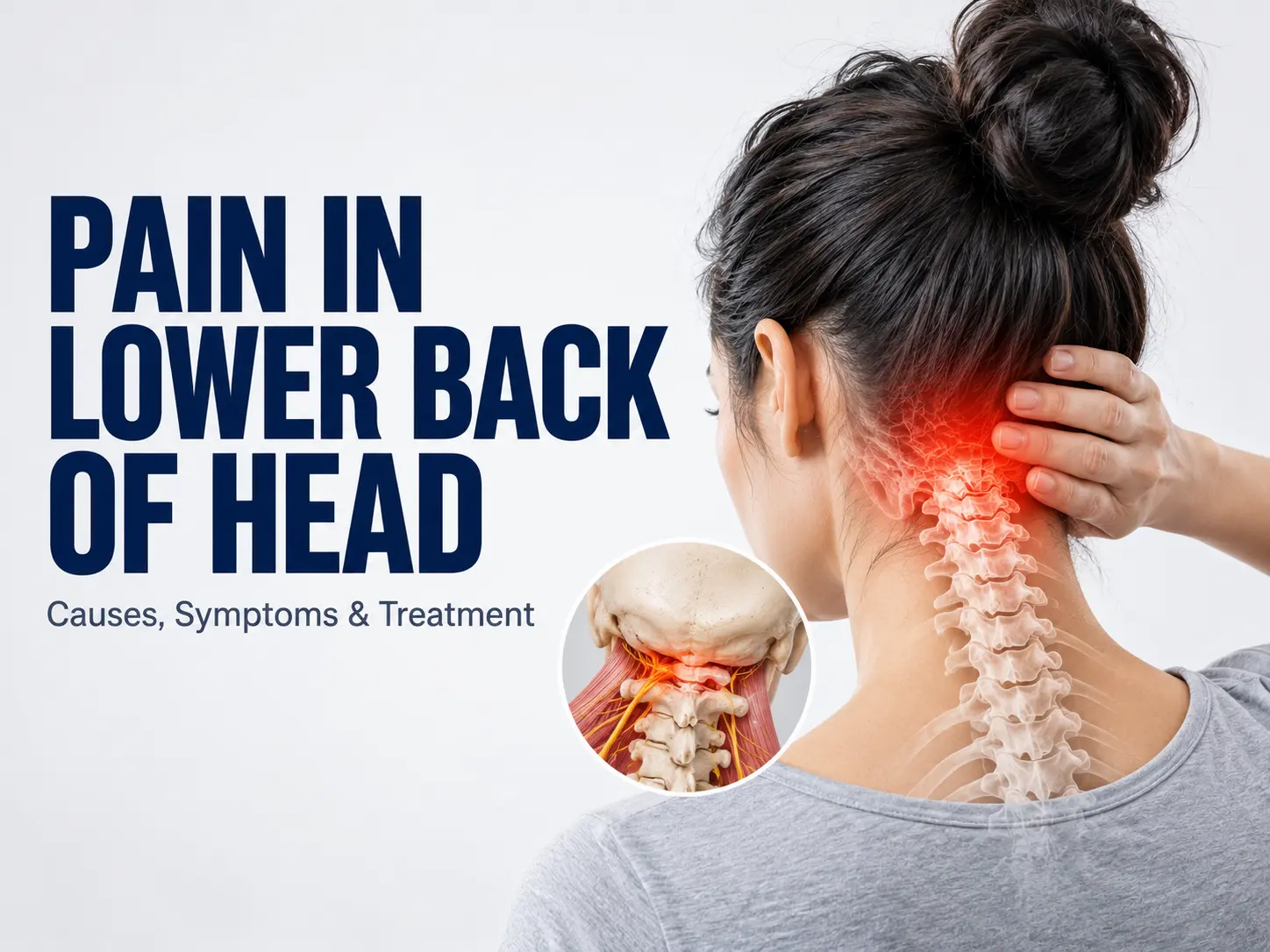
The lower back of the head is the area around the base of the skull, immediately above the upper part of the neck.
This region contains and is surrounded by:
- The upper cervical spine
- Muscles supporting the head and neck
- Joints between the upper cervical vertebrae
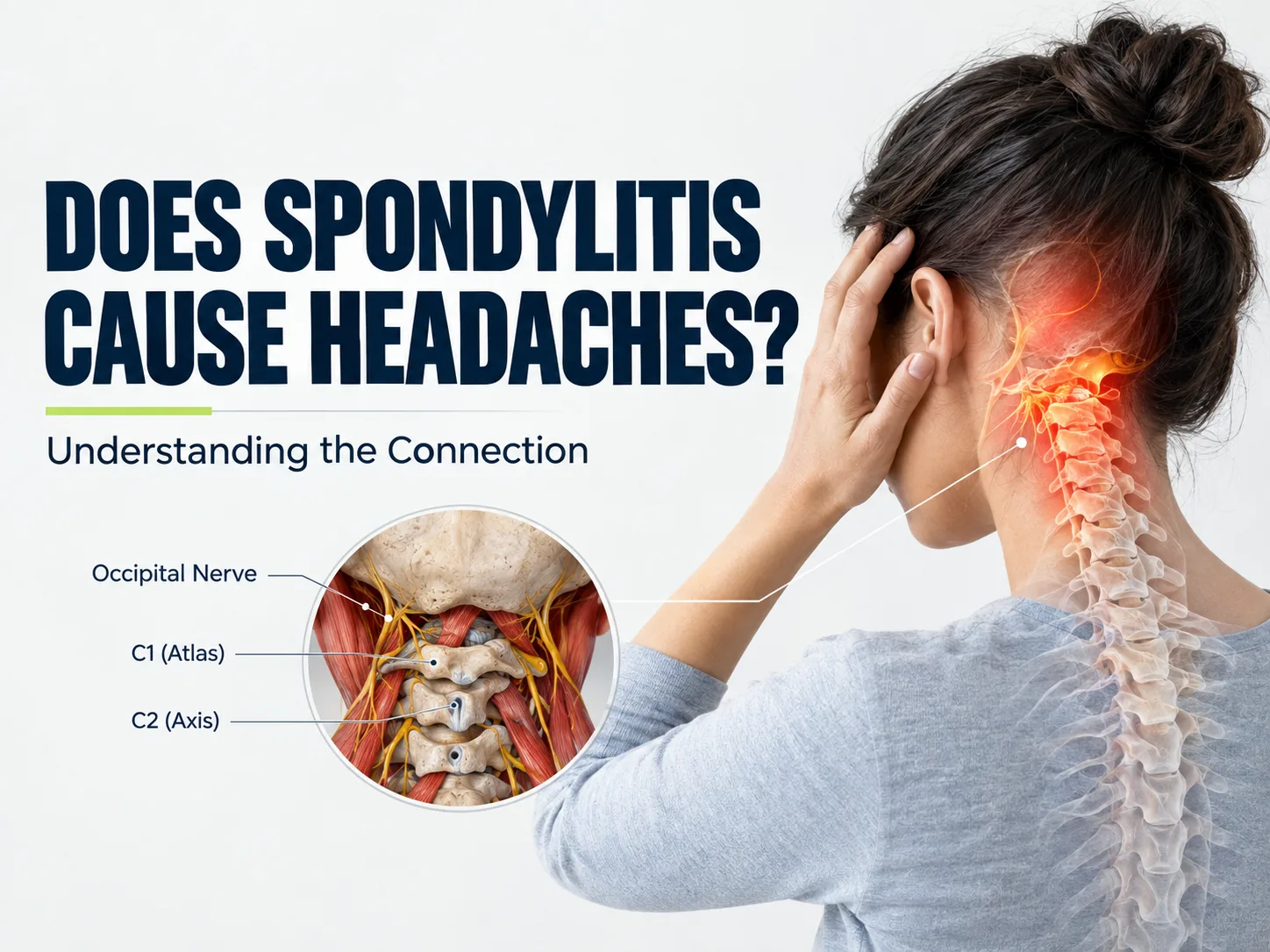
- Occipital nerves
- Blood vessels and other soft tissues
Because the head and upper neck are closely connected, a problem originating in the neck can sometimes be experienced as pain in the back of the head.
What Causes Pain in the Lower Back of the Head?
1. Muscle Tension or Strain
Tight or overworked muscles in the neck and upper shoulders can cause aching around the lower back of the head.
This can happen after:
- Long periods of computer or phone use
- Poor or sustained posture
- Sleeping in an awkward position
- Repetitive activities
- Sudden neck movements
- Physical or emotional stress
The pain may be accompanied by neck stiffness or tenderness around the upper shoulders.
2. Cervicogenic Headache
A cervicogenic headache is a headache caused by a problem involving structures in the cervical spine or surrounding tissues.
The pain can begin around the upper neck or lower back of the head and spread toward the side or front of the head.
It can sometimes become worse with certain neck movements.
Importantly, not every headache felt at the back of the head is cervicogenic. Other headache disorders can produce pain in the same area.
3. Cervical Spondylosis
Cervical spondylosis describes age-related changes in the cervical spine, including changes involving the discs and joints.
Some people with cervical spondylosis experience neck pain and stiffness. In certain cases, irritation of structures in the cervical spine can contribute to pain around the back of the head.
4. Occipital Neuralgia
The occipital nerves run from the upper neck toward the scalp at the back of the head.
Irritation of these nerves can cause occipital neuralgia, which may produce:
- Sharp or shooting pain
- Burning pain
- Electric-shock-like sensations
- Tenderness around the back of the scalp
- Pain on one or both sides of the head
The pain can be intermittent rather than constant.
5. Tension-Type Headache
Tension-type headaches can cause a pressing or tightening sensation around the head and can involve the back of the head and neck.
Muscle tension around the neck and shoulders can accompany this type of headache.
6. Migraine
Migraine does not always cause pain only on one side or at the front of the head. Some people experience pain toward the back of the head.
Other migraine symptoms can include:
- Nausea
- Sensitivity to light
- Sensitivity to sound
- Visual symptoms
- Throbbing or pulsating pain
The presence of neck pain does not rule out migraine.
7. Neck Injury or Whiplash
A sudden movement of the neck can strain muscles, ligaments and other cervical structures.
Pain at the base of the skull after a road traffic accident, sports injury or fall can occur with whiplash or other neck injuries.
Significant trauma accompanied by severe pain or neurological symptoms requires medical assessment.
Can Neck Problems Cause Pain in the Lower Back of the Head?
Yes.
The upper cervical spine and structures around the neck can contribute to pain felt at the base or back of the head.
This is particularly relevant in cervicogenic headache, where pain originating from the neck is perceived in the head.
Neck-related pain may be more noticeable when:
- Turning or extending the neck
- Holding the neck in one position for a long time
- Looking down for prolonged periods
- Moving after a period of inactivity
However, the same location of pain can occur with several different conditions, so the location alone cannot establish the diagnosis.
Can Cervical Spondylosis Cause Pain at the Back of the Head?
It can be associated with neck pain and headaches in some people, but cervical spondylosis is not the cause of every headache or pain at the back of the head.
Cervical spondylosis is common with increasing age, and imaging can show degenerative changes even in people who have no symptoms.
The diagnosis should therefore be based on the combination of symptoms, physical examination and, when appropriate, imaging.
You can learn more about cervical spondylosis in our detailed guide.
How to Relieve Pain in the Lower Back of the Head
Treatment depends on the underlying cause.
For uncomplicated muscular or posture-related pain, initial measures can include:
Gentle Movement
Avoid keeping your neck in one position for prolonged periods. Gentle movement within a comfortable range can help prevent stiffness.
Improve Your Working Position
If you spend long periods at a desk, keep your screen at a comfortable height and take regular movement breaks.
Avoid repeatedly bending the neck forward for long periods when using a phone or other device.
Use Heat or Cold
Some people find heat useful for muscular stiffness, while cold can provide short-term relief after an acute strain.
Protect the skin by wrapping heat or cold packs rather than applying them directly.
Consider Appropriate Exercises
Exercises aimed at improving neck mobility and strengthening the muscles supporting the neck can be useful for some causes of neck pain.
Examples include:
- Gentle cervical range-of-motion exercises
- Chin-tuck exercises
- Shoulder-blade strengthening
- Upper-back mobility exercises
The appropriate exercises depend on the underlying condition. Persistent head pain, arm symptoms or neurological changes should be assessed before starting an extensive exercise programme.
For related information, see our guide to 10 best exercises for neck pain relief.
When Is Pain in the Lower Back of the Head Serious?
Most pain in this area is not caused by a dangerous condition. However, a sudden or severe headache with neurological or systemic symptoms requires urgent medical assessment.
Seek urgent medical attention if the pain is associated with:
- Sudden, extremely severe headache
- Loss of consciousness
- New weakness or numbness
- Difficulty speaking
- New vision problems
- Severe confusion
- Difficulty walking
- Repeated vomiting
- Fever with significant neck stiffness
- A significant head or neck injury
New neurological symptoms should not be assumed to be caused by cervical spine problems.
When Should You See a Spine Specialist?
Consider an assessment when pain in the lower back of the head:
- Keeps returning
- Persists despite appropriate self-care
- Is associated with persistent neck pain
- Travels into the shoulder or arm
- Is accompanied by arm or hand numbness
- Is associated with weakness
- Interferes with sleep or daily activities
- Is associated with significant neck stiffness
A clinical assessment can help determine whether the symptoms are related to the cervical spine, muscles, nerves or another cause.
Conclusion
Pain in the lower back of the head can come from the neck, muscles, nerves or a headache disorder. Muscle tension, prolonged posture, cervical spine problems, cervicogenic headache and occipital neuralgia are among the possible causes.
The right treatment depends on identifying the cause. Simple muscular pain can often improve with appropriate movement, posture changes and targeted exercises, while persistent pain or symptoms involving the arms, neurological function or significant injury require proper assessment.
Sudden severe head pain, new neurological symptoms, significant trauma or severe illness alongside the pain should be treated as warning signs requiring urgent medical attention.
Frequently Asked Questions
Why does the lower back of my head hurt?
Pain in the lower back of the head can result from muscle tension, neck problems, cervicogenic headache, tension-type headache, migraine or irritation of the occipital nerves. The cause depends on the pattern of symptoms and associated findings.
Can poor posture cause pain at the base of the skull?
Yes. Prolonged or awkward neck positions can place stress on the muscles and joints around the neck and base of the skull. Improving your working position and taking regular movement breaks can reduce this type of strain.
Can cervical pain cause pain in the back of the head?
Yes. Pain originating from the cervical spine or surrounding structures can sometimes be perceived at the back or base of the skull.
Is pain at the base of the skull a sign of cervical spondylosis?
Not necessarily. Cervical spondylosis can be associated with neck pain and headaches, but pain at the base of the skull has many possible causes.
Can a pinched nerve cause pain in the back of the head?
Irritation of the occipital nerves can produce sharp, shooting or burning pain around the back of the head. Cervical nerve-root compression more commonly produces symptoms travelling into the shoulder, arm or hand.
Should I massage the lower back of my head?
Gentle massage of tense muscles can be comfortable for some people, but forceful manipulation of the neck should be avoided, particularly after an injury or when neurological symptoms are present.
Can stress cause pain at the lower back of the head?
Stress can contribute to muscle tension and tension-type headaches, which can involve the neck and back of the head. Persistent or severe pain should not automatically be attributed to stress without considering other causes.
Can pain at the back of the head come from the neck?
Yes. Neck-related headaches, including cervicogenic headaches, can cause pain that starts around the upper neck or base of the skull and spreads into the head.




One Response