

C5-C6 Disc Bulge: Symptoms, Causes, Treatment and Recovery
A C5-C6 disc bulge is a common condition affecting the cervical spine, or the neck. It occurs when the disc between the fifth and sixth cervical vertebrae extends beyond its normal boundary.
Not every disc bulge causes symptoms. Some people may have a C5-C6 disc bulge visible on an MRI without experiencing significant pain. However, if the bulging disc irritates or compresses a nearby nerve, it can cause neck pain, stiffness, shoulder discomfort, arm pain, tingling, numbness, or weakness.
Because the C5-C6 level is frequently involved in cervical disc problems, understanding its symptoms and treatment options can help you make informed decisions about your spine health.aaa
What Is a C5-C6 Disc Bulge?
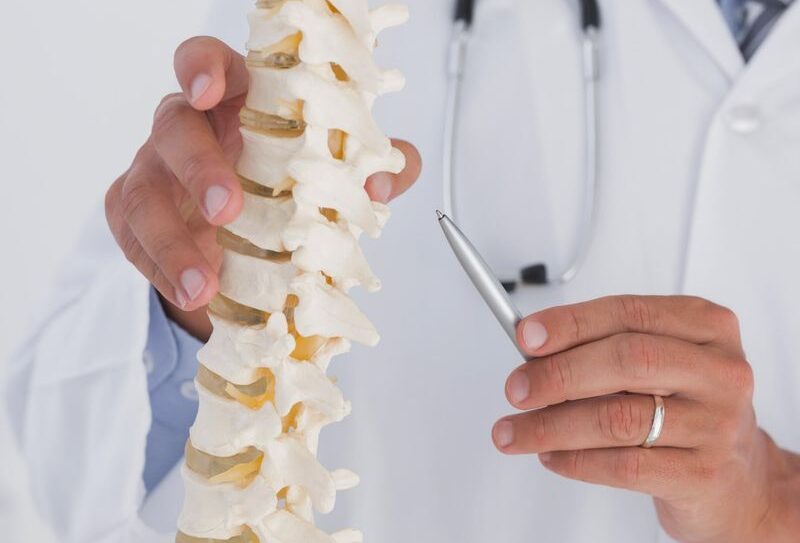
The cervical spine contains seven vertebrae, labelled C1 through C7. Between these vertebrae are flexible discs that absorb shock and allow the neck to move.
The C5-C6 disc is located between:
- C5 – the fifth cervical vertebra
- C6 – the sixth cervical vertebra
With a disc bulge, the outer portion of the disc extends beyond its usual boundary.
A bulge does not necessarily mean that the disc has ruptured or that surgery is required. The significance of the finding depends on whether it is causing nerve or spinal cord compression and whether it matches the person’s symptoms.
C5-C6 Disc Bulge Symptoms
Symptoms can vary considerably depending on whether the bulge is affecting nearby nerves or other structures.
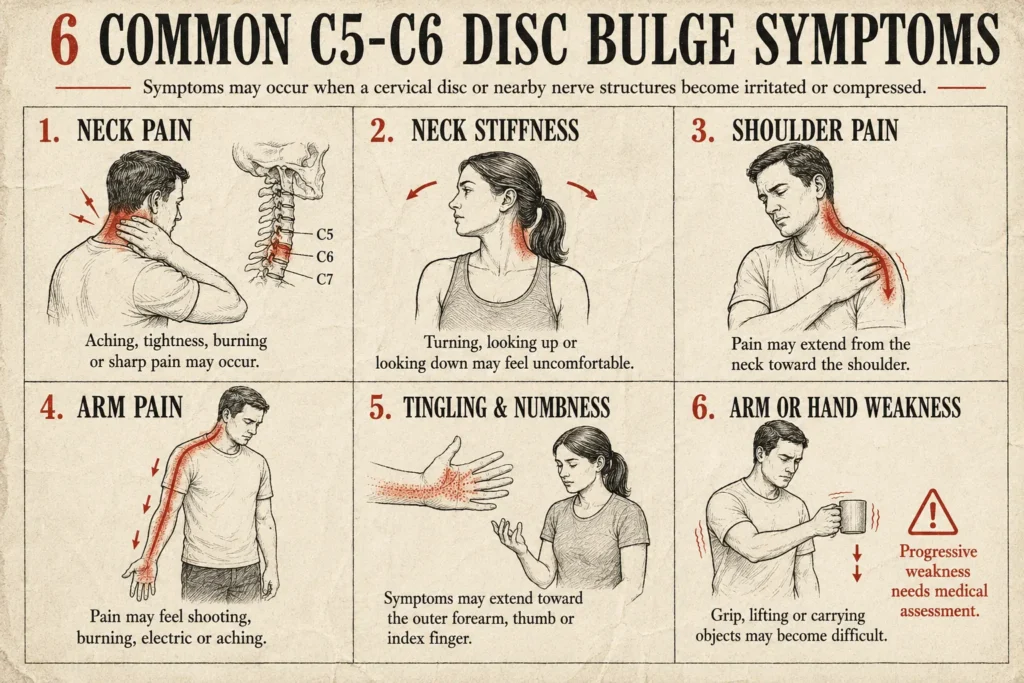
1. Neck Pain
Neck pain is one of the most common symptoms.
The discomfort may feel:
- Aching
- Stiff
- Tight
- Burning
- Sharp during certain movements
Pain may become worse after prolonged computer use, looking down at a phone, or maintaining the same position for an extended period.
2. Neck Stiffness
A C5-C6 disc problem can make neck movement uncomfortable.
You may notice difficulty or pain when:
- Turning your head
- Looking up
- Looking down
- Checking your blind spot while driving
Muscle spasms around the neck and upper back may contribute to stiffness.
3. Shoulder Pain
Pain may extend from the neck toward the shoulder.
This can sometimes be confused with a shoulder joint problem, particularly when there is no obvious neck pain.
A clinical examination is important to determine whether the symptoms originate from the cervical spine or the shoulder.
4. Pain Radiating Into the Arm
When the C6 nerve root is irritated or compressed, pain can travel from the neck into the arm.
This may be described as:
- Shooting pain
- Burning pain
- Electric shock-like pain
- Deep aching pain
The pain may become more noticeable with certain neck positions.
5. Tingling and Numbness
Nerve irritation can produce altered sensations in the arm or hand.
With C6 nerve root involvement, symptoms may extend toward the:
- Outer forearm
- Thumb
- Index finger
However, symptom patterns can overlap between nerve roots, so the location of numbness alone cannot confirm which nerve is affected.
6. Arm or Hand Weakness
Nerve compression can sometimes cause weakness.
Depending on the affected structures, you may experience difficulty with activities such as:
- Lifting objects
- Carrying bags
- Bending the elbow
- Gripping objects
Progressive weakness requires medical assessment.
What Causes a C5-C6 Disc Bulge?
Several factors can contribute to cervical disc changes.
Age-Related Disc Degeneration
As people age, spinal discs gradually lose water content and flexibility. This can make them more susceptible to bulging.
Poor Posture
Prolonged forward-head posture, particularly while using computers and mobile devices, can increase stress on the neck.
Repetitive Neck Movements
Certain occupational or recreational activities involve repeated neck movement or loading.
Injury
A sudden impact, fall, or whiplash injury may contribute to disc problems.
Smoking
Smoking can negatively affect disc health and may contribute to degenerative changes in the spine.
Is a C5-C6 Disc Bulge Serious?
A C5-C6 disc bulge is not automatically a serious condition.
The severity depends on factors such as:
- The size and location of the bulge
- Whether a nerve is compressed
- Whether the spinal cord is affected
- The severity of symptoms
- Whether neurological deficits are present
An MRI finding should therefore be interpreted alongside a clinical examination rather than viewed in isolation.
A person with a large-looking bulge may have few symptoms, while someone with a smaller abnormality in a sensitive location may experience significant pain.
How Is a C5-C6 Disc Bulge Diagnosed?
Diagnosis typically involves a combination of medical history, physical examination, and imaging when appropriate.
Physical Examination
A spine specialist may assess:
Neck movement
Muscle strength
Sensation
Reflexes
Arm movement
Coordination
MRI
An MRI can provide detailed information about:
Disc bulges
Disc herniation
Nerve compression
Spinal cord compression
Degenerative changes
X-Ray
X-rays can help assess:
Alignment
Bone changes
Disc-space narrowing
Degenerative changes
However, an X-ray does not show nerves and discs as clearly as MRI.
C5-C6 Disc Bulge Treatment
Treatment depends on the severity of symptoms and whether neurological problems are present.
For many people, treatment initially focuses on conservative care.
Physiotherapy
Physiotherapy may help improve:
Neck mobility
Posture
Muscle strength
Shoulder and upper-back control
A physiotherapist can develop an exercise program based on your symptoms.
Medications
Depending on the individual’s medical history, a doctor may recommend medication to manage pain and inflammation.
Do not take prescription or over-the-counter medication regularly without considering potential side effects, drug interactions, and other health conditions.
Activity Modification
Temporary modification of activities that aggravate symptoms may help during recovery.
This may include:
Taking regular breaks from sitting
Reducing prolonged phone use
Avoiding heavy lifting during painful flare-ups
Improving workstation ergonomics
Heat or Cold Therapy
Some people find temporary relief from:
Cold packs during acute painful episodes
Heat for muscle tightness
Use these methods appropriately and avoid applying extreme temperatures directly to the skin.
What Should You Avoid With a C5-C6 Disc Bulge?
Depending on your symptoms, you may need to temporarily limit activities that significantly aggravate your neck.
These may include:
- Heavy overhead lifting
- High-impact activities during painful flare-ups
- Repeated forceful neck movements
- Prolonged forward-head posture
- Exercises that reproduce arm pain or neurological symptoms
You do not necessarily need to avoid all physical activity. Gradual, controlled movement is generally preferable to prolonged inactivity.
C5-C6 Disc Bulge: When Should You See a Spine Specialist?
Consider consulting a spine specialist if:
- Neck pain persists despite home care
- Pain travels into the arm
- You experience persistent numbness or tingling
- Your grip or arm strength is decreasing
- Symptoms interfere with work or sleep
- Symptoms continue to worsen
A specialist can determine whether the disc bulge is actually responsible for your symptoms and recommend appropriate treatment.
Conclusion
A C5-C6 disc bulge is a common cervical spine finding that may or may not cause symptoms. When the bulging disc irritates a nearby nerve, it can lead to neck pain, shoulder discomfort, radiating arm pain, numbness, tingling, or weakness.
In many cases, symptoms can improve with appropriate non-surgical treatment such as physiotherapy, exercise, activity modification, and pain management. However, progressive weakness, balance problems, loss of coordination, or other signs of spinal cord involvement require prompt medical evaluation.
If you have persistent neck or arm symptoms, an experienced spine specialist can correlate your symptoms with your examination and MRI findings and recommend the most appropriate treatment for your condition.
Related We Are Spine resources:





2 Responses